PETA Entity Scientists Seized a Rare Chance to Oppose Australia’s Animal Use in Science – Here’s Why it Matters
For the first time in 13 years, the National Health and Medical Research Council (NHMRC) is reviewing the Australian code for the care and use of animals for scientific purposes. This means that a new edition of the code – not just a tweak of previous guidelines – may come into force.
Given Australia currently uses at least five million animals in experiments each year, this is big news. Since revisions were last made, there have been great strides in state-of-the-art animal-free methods, and scientists from PETA entities have launched the Research Modernisation Deal, a roadmap to guide policymakers away from animal abuse and toward effective, humane science.
Much has changed, but one thing remains the same – animals are not ours to experiment on, and an end to their use is long overdue.
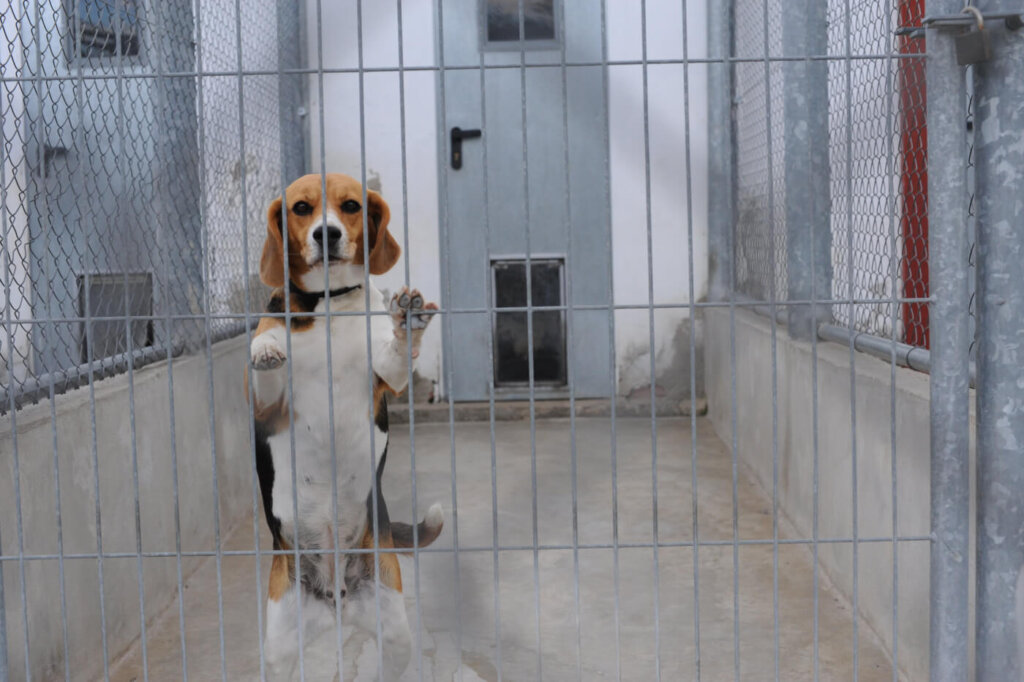
Animals Suffer in Australian Facilities
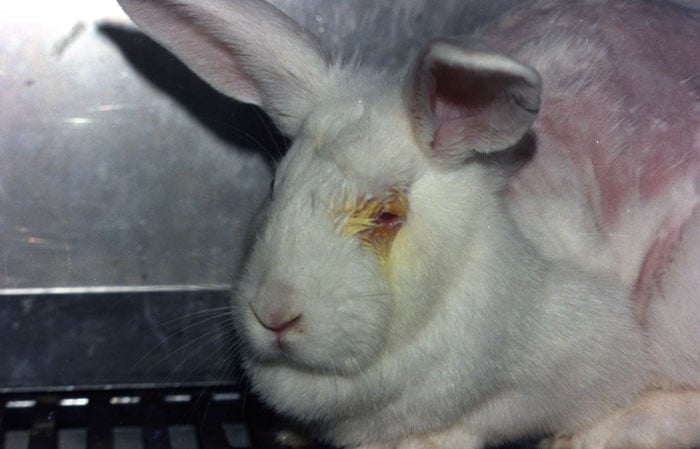
If you picture rats running through mazes when you hear the words “animal testing”, you’re not alone, but experiments on animals are far more ghastly, cruel, and pointless than most imagine.
Here are just some of the atrocities animals in Australian laboratories have endured:
- Kittens were deliberately deafened, and cats had their eyes injected with a chemical to measure damage
- Monkeys were addicted to drugs and holes drilled into their skulls
- Wild octopuses were caught and then killed with an overdose
- Hundreds of sheep were subjected to simulated live export journeys
- Unwanted greyhounds were drained of their blood and then killed
- Rats were strangled to cause brain damage
Are these the kinds of things you want your tax dollars to support?
Experiments on Animals: Shrouded in Secrecy
In 2020, Sydney residents were shocked when three baboons escaped a transit van en route to Royal Prince Albert Hospital. Were they illegal pets? Zoo escapees? No. The truth was far darker.
The baboons were escapees from a colony in Western Sydney, where they were purpose-bred for xperiments. Most Australians were shocked – before these monkeys made their bid for freedom, few realised that animals were suffering in secret laboratories across the country.
This isn’t due to a lack of public curiosity: animal experimentation in Australia is as transparent as mud.
The exact number of animals used is unknown because there is no national system for collating statistics on animal use, only some states publish figures on animal use, and the requirement for institutions to publish reports of compliance or external review is voluntary.
What’s happening to animals in research is immoral, secretive – and pointless.
Animal Use Isn’t Just Cruel, It’s Bad Science
In all the ways that matter, such as their ability to feel joy, pain, grief and hope, animals are just like us. But in their biology and response to medical trauma, illness and medications, they’re vastly different.
This makes using them to predict human responses to medical interventions pointless. It has been estimated that a “novel drug can take 10 to 15 years and more than $2 billion to develop, and failure rates occur in about 95 per cent of human studies”. Clearly, there is a problem with the current paradigm for developing and testing drugs , and experiments on animals are one of the main contributing factors.
Ending animal use in research is not only about helping animals; it’s about helping humans access superior science.
Superior, animal-free methods, like organs-on-chips, organoids, AI and predictive computer models, are the future – and present – of humane, accurate and human-relevant research.
With the UK, Europe and the United States all making strides away from experiments on animals, Australia – once famed for scientific advancements – risks falling behind.
It’s time to not only change the code of practice around animal use, but to abolish animal use entirely.
What Is PETA Doing?
PETA entities employ an impressive cache of scientists who specialise in animal-free research. Together, they’ve created the Research Modernisation Deal (RMD).
The RMD outlines a roadmap for replacing the use of animals in experiments with human-relevant methods.
PETA always has, and will, always demand an end to all animal use. Meanwhile, submitters to this code review are bound by the specific questions.
On this front, PETA’s submission calls for, among other things:
- The publication of national statistics on the number and species of all animals used in scientific procedures to lift the veil on this secrecy
- The publication of project applications that are being reviewed by the institutional AEC so that external experts may feed into these about the availability of non-animal methods
- The publication of national annual reporting on compliance and enforcement data to reveal where animal use is subject to legal violations
- An immediate ban on several areas of animal use, including the forced swim test, sepsis studies and other experiments
- Public access to guidelines and standards, along with regular updates on emerging best practices, including the availability of non-animal methods
- The establishment of an independent advisory body with experts in non-animal methods, similar to those in other nations
- The inclusion of all sentient animals, including decapods (including crabs, lobsters, crayfish, and shrimp), in the Australian Code for the Care and Use of Animals for Scientific Purposes
How Can You Help Animals Used in Experiments?
You don’t need a white coat and a microscope to help animals languishing in laboratories.
You can help by never buying anything tested on animals, signing onto our action alerts, and submitting your own response to the code review process before February 16.
Help Animals in 2026: Renew Your PETA Membership!
Donate Now