PETA Demands Transparency from TAB: Add Horse Death Odds to Betting Slips
As Australia braces for the disgrace that stops the nation, the Melbourne Cup, PETA has sent a letter to betting site giant TAB asking it to make gambling on the race “more accurate and transparent” by including the odds that a horse will die during the race.
PETA calculates, based on fatality statistics, that the decimal odds of a fatality across the four days of the Melbourne Cup Carnival are around 6.0, or 5:1. But every race puts horses at risk.
Shouldn’t punters be reminded that they’re gambling with animals’ lives?

You Bet, Horses Die
In every horse race, horses, often too young to have fully developed skeletons, are whipped to run at breakneck speeds on ankles no thicker than ours, while carrying a human. Regardless of how straight a track is or how many CT scans are performed, exploiting animals for entertainment is wrong – and dangerous.
Predictably, horses often stumble, breaking bones, tearing tendons, and sometimes dying where they fall. Other horses’ injuries are so bad they’re shot on track or euthanised after the race.
Since 2013, 6 horses have died in the Melbourne Cup; 7 on Cup Day. While the Melbourne Cup is one of Australia’s best-known races, an average of 2 horses die every day on Australian tracks, with a record 175 horses dying in the past racing year.
Horse Racing Kills Off The Track, Too
Not every horse bred for racing is fast enough to do so, and even if they are, their careers are short. The industry refers to both the foals bred for racing but discarded by the industry, and to those who once raced but no longer do, as “wastage”.
While some of those horses are sold to private owners or retired to sanctuaries, many face live export for slaughter or breeding use overseas or are slaughtered locally to be sold as meat or food for companion animals.
Some mares, like Black Caviar, are spared slaughter, but denied rest, used instead as breeding machines. Repeatedly trussed up in the instruments of forced impregnation, Black Caviar died the day before her 18th birthday, shortly after delivering her ninth foal in just 11 years.
Whether it’s because they fall while being forced to race, or because they’re deemed too slow, too injured, or too old, horses are nothing more than commodities to the horse racing industry, and if they’re not turning a profit, they’re considered worthless.
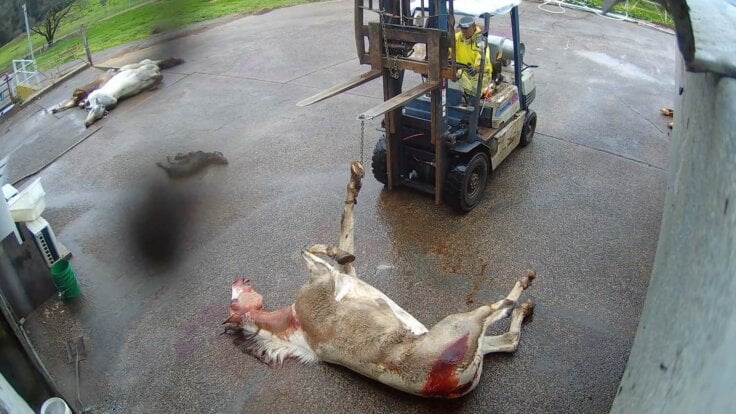
Race Meets Mean Horse Meat
Horses are gentle, highly sensitive prey animals who are easily frightened and highly perceptive, so you can imagine how terrifying having their throats slit inside a slaughterhouse (also known as a knackery) is for them.
One PETA video exposé of South Korean slaughterhouses revealed Australian thoroughbreds being abused and killed for meat, including the half-brother of racing legend Winx.
Next time you hear the racing industry claim it treats horses ‘like royalty’, remember the horses who went from winner to dinner.
You Can Help Horses
You can help horses by never placing a bet or attending a race.
You can also urge the brands, like Lexus, that sponsor the Melbourne Cup to stop promoting the race.
Help Animals in 2026: Renew Your PETA Membership!
Donate Now