No Happy Hump Days: How Clever Camels Are Abused – And How You Can Help
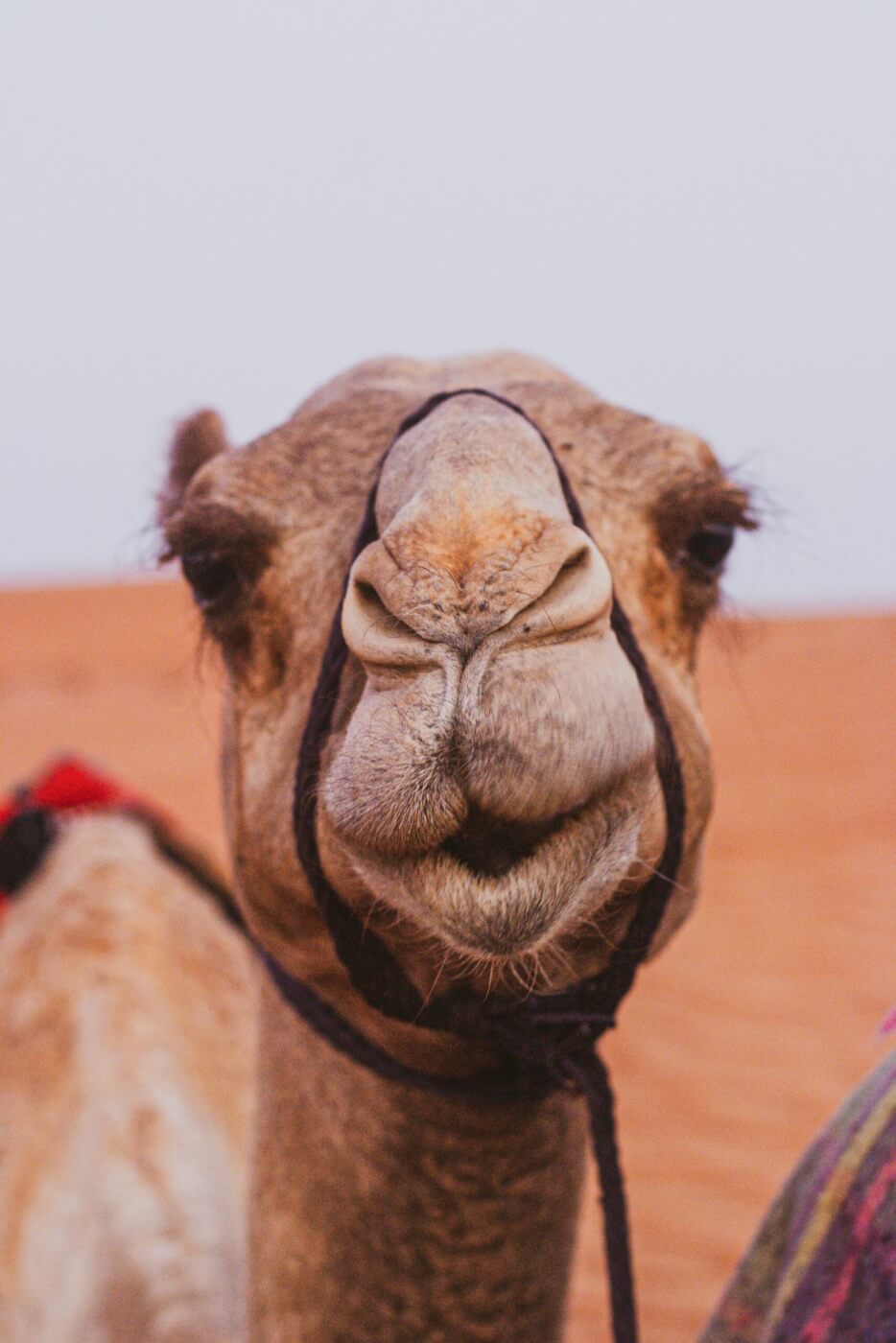
June 22 is World Camel Day, when we recognise one of the world’s most resilient, complex animals. Camels are gentle, clever, and demonstrate emotional intelligence comparable to that of the great apes.
Despite this, camels are used and abused for their flesh and milk, ridden to death, hunted, and live exported, in Australia and all over the world.
Learn about the cruelty humans impose on camels, and how you can help.
Camels Seek Relationships, Not Riders
In nature, camels form one of the world’s most complex social networks, building relationships that extend beyond individual herds to span many miles and generations. Through this, they communicate everything from safe travel routes to watering holes and even recognise and cheerily greet acquaintances after decades apart!
Camels’ need for connection is ignored in the tourist industry. In Australia, camels used for rides are tied up for hours and forced to walk in boring circles with humans on their backs.
At tourist attractions in the Middle East, camels are routinely used as rides and taxis, forced to walk up steep gradients in the scorching sun, loaded up with tourists, and beaten mercilessly. When they’re too sick to go on, camels are dumped in pits and left to die.
Camels Are Mothers, Not Milk Machines
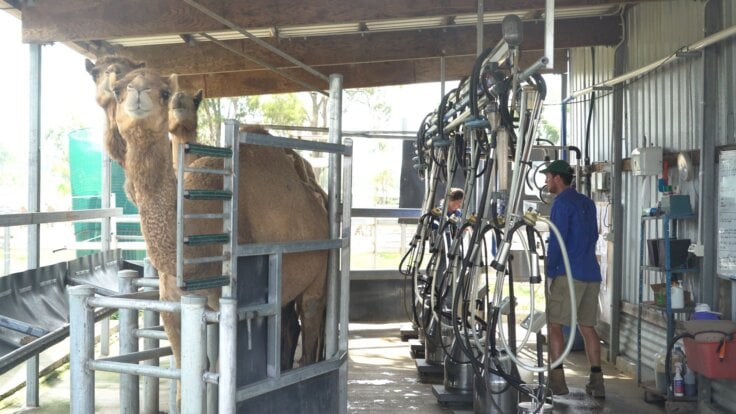
Did you know that Australia has an emerging camel dairy industry?
If allowed, mother camels are among the animal kingdom’s most devoted mothers, carrying their babies for over a year, and nursing them for another 18 months. Camel families stay close, with adults teaching skills to and playing with their young with unrivalled patience and tenderness.
Camels used for their milk in Australia are routinely captured from the wild and farmed just like cows used for dairy, with mothers and babies denied a connection, and bulls (males) disposed of.
Camels Are Empaths, Not Exports
Humans may be cruel to camels, but camels demonstrate empathy and kindness to others, including us. Camels can detect sadness and stress in others and will often nuzzle or make comforting sounds to those in need.
Camels are highly emotional animals who grieve when separated from their loved ones. Like humans and elephants, camels hold vigils for deceased friends, and some camels revisit places where they lost loved ones to stand in quiet contemplation.
Every year, Australia exports dozens of both wild and domesticated camels on live export ships, where their emotions and individuality are ignored.
Camels Are Smart, not Steaks
Camels are among the most intelligent animals on the planet, demonstrating an ability to use tools and strategy, such as learning to undo knots and rationing resources. They also speak using 30 distinct vocalisations alongside subtle body language.
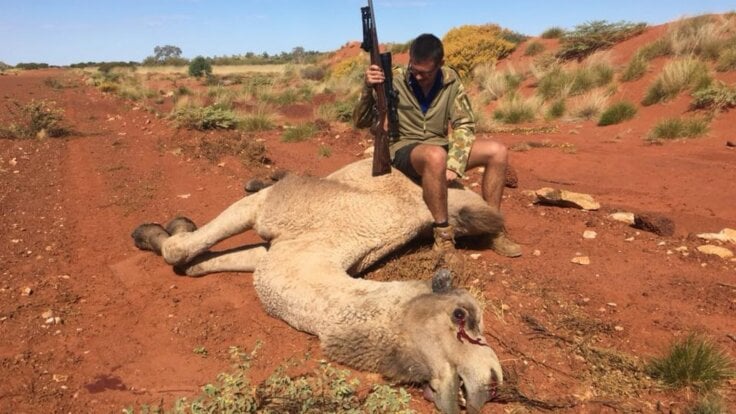
In Australia, camels are caught in the outback and taken to farms before slaughter. Terrified camels are trucked to their deaths alongside other animals, shot with a captive gun before having their throats slit, often in front of each other, despite how sensitive they are to others’ pain.
Of course, intellect isn’t the reason not to hurt someone. Like all animals, camels feel pain and fear, and there is never any way to ‘humanely’ slaughter them.
Camels Are People, Not Pests
Camels never asked to be brought to Australia, but now, thanks to humans dumping them when they were no longer needed for exploration, their presence is considered a problem, and camels pay with their lives.
In Australia, wild camel populations – who live in low population areas and reproduce slowly, anyhow – are rounded up for live export, or shot by the thousands, leaving their families to grieve.
Part of the reason Australia has declared war on camels – despite bringing them here – is that they compete with animal agriculture for land and resources. Killing wild animals to make more money from abusing farmed ones is cruel and myopic.
You Can Help Camels
There are many ways you can help camels live the lives they deserve. Never put their flesh – or anyone’s – on your plate, oppose live export and planned killing, and pledge to never ride them or any animal while on holiday.
Please urge Egypt’s minister of tourism and antiquities to end animal abuse by banning horse-drawn carriages and camel rides.
Help Animals in 2026: Renew Your PETA Membership!
Donate Now