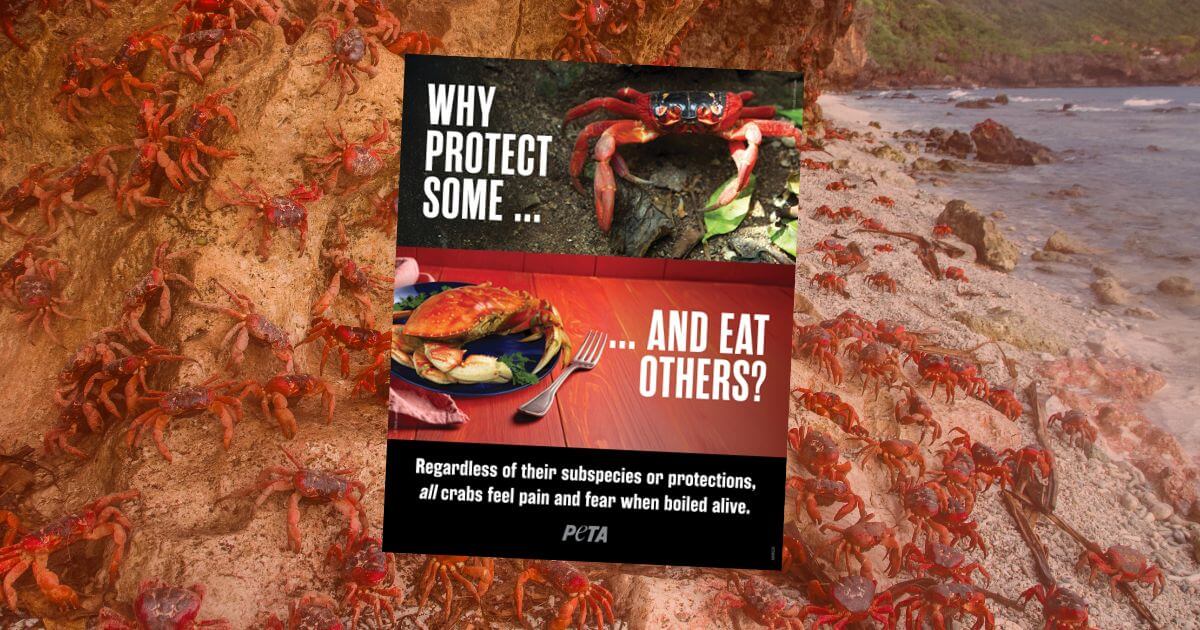
Sidestepping Logic: Celebrating Christmas Island Crabs While Eating Mud Crab’s Legs
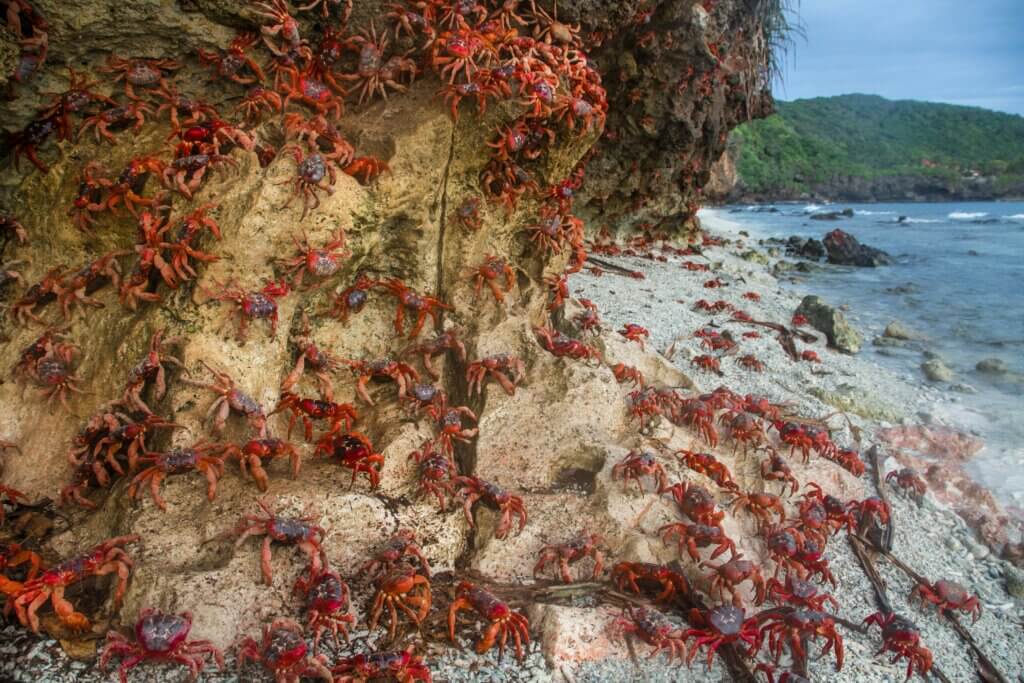
Each summer, Christmas Island, a tiny territory off the coast of Perth, plays host to one of life’s more miraculous events: the annual red crab migration.
During this eye-catching event, the island is carpeted crimson with red crabs migrating from the island’s interior forests to the ocean to mate and lay their eggs.
It’s also the time of year when Australians consume a staggering amount (thousands of tonnes) of dead sea animals, including crabs, whose delicate bodies are popular Christmas fare.
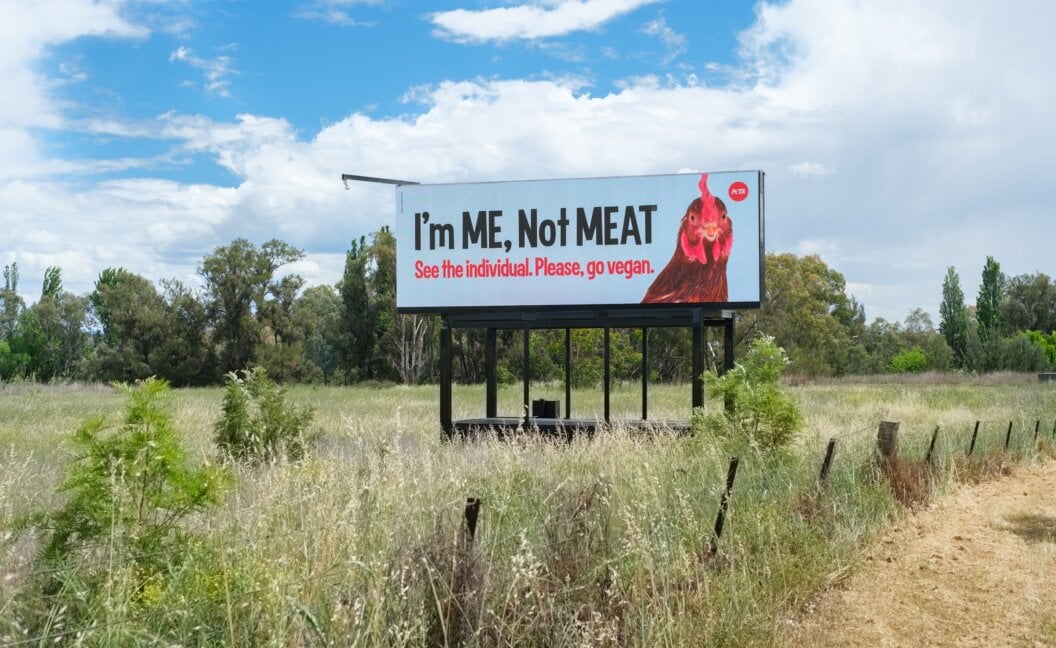
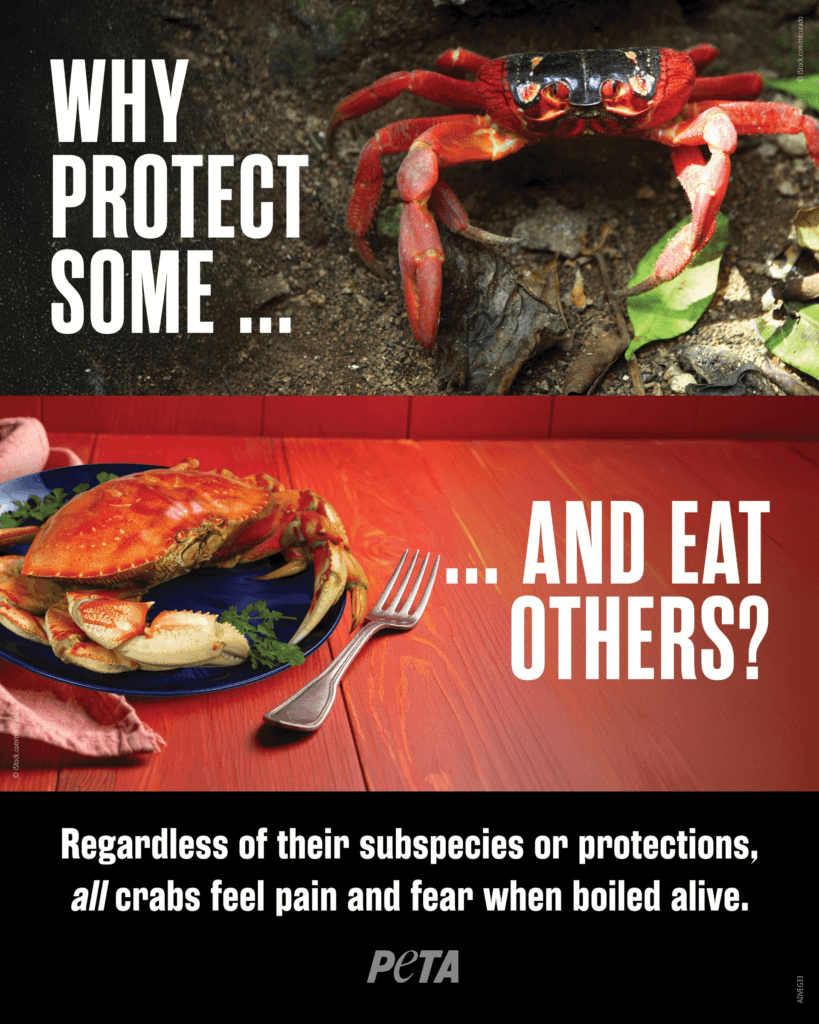
This, of course, makes no sense, prompting PETA to ask Christmas Island authorities to erect a billboard asking locals: “Why love some and eat others?”
Every Crab is Someone
If you’ve ever seen this viral video where a crab attempts to protect his mate from being taken by an intrusive human, or witnessed a Smooth Boxed Crab carrying his mate to safety, you likely realise that these complex crustations are fiercely protective of their loved ones.
Crabs are also clever and resourceful, and have excellent memories. They recall painful experiences and avoid the associated locations or situations for extended periods. They also learn from their mistakes and retain that information, so they don’t make the same mistakes again in the future.
Crabs also have excellent senses of sight, smell, and taste, and can expertly adapt to changing cues in their environment.
Cruelty Toward Crabs
Like all animals with nerves and an array of other senses, they feel and react to pain when prepared as food, but the ways in which humans treat crabs and other crustaceans are abhorrent.
Humans kill hundreds of millions of crabs every year. Fishers lay traps in shallow water and drag huge nets along the ocean floor. These methods also capture nontarget animals such as birds, fish, and other marine animals – called “bycatch” – who are thrown back into the water dead or dying.
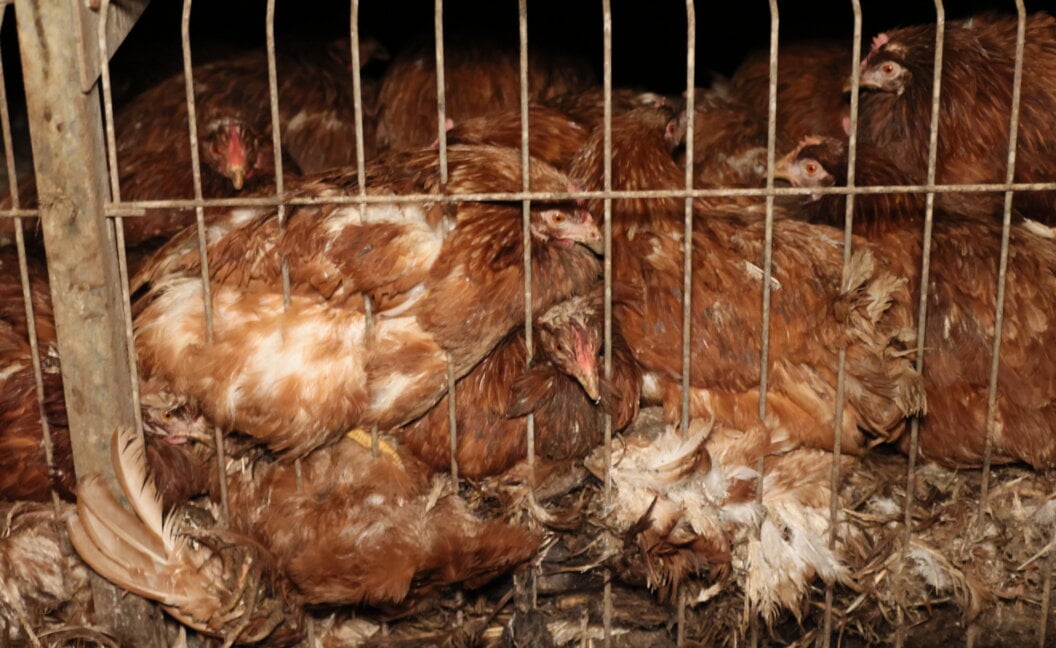
Crabs are then crowded together in holding containers where, scared and confused, they may fight, adding injuries to those already sustained from rough handling. Many die before they even reach the market.
Crabs are often thrown into pots of scalding-hot water and boiled alive, while others are electrocuted, chopped up, and microwaved – all while they are still conscious.
There Are Plenty more Fish (Upgrades) In The Sea
These days, there are almost more vegan upgrades to eating sea life in supermarkets than there are fish left in the sea, including vegan crab meat!
There’s also vegan fish, calamari, prawns – and even sashimi – to satisfy your sushi craving without harming animals.
Snap Out of Speciesism to Save Crabs and Other Animals
While the red crabs of Christmas Island are a protected species, they’re no different in all the ways that matter, to the mud, spanner, and blue swimmer crabs, who are traditionally eaten at Christmas. If you’re ready to live more logically (and kindly), please, go vegan. You’ll find all the resources and support you need just by taking our 30-day vegan pledge.
Help Animals in 2026: Renew Your PETA Membership!
Donate Now