Tasmania’s Salmon Farms—And All Fish Factory Farms—Must Go, Not Grow
Most people are familiar with the intensive factory farming of pigs, chickens, and other mammals exploited for food, but few realise that fish are also factory-farmed. In Australia, farming marine animals (called aquaculture) is the country’s fastest-growing primary industry, accounting for 34% of the total gross value of sea animals used for food.
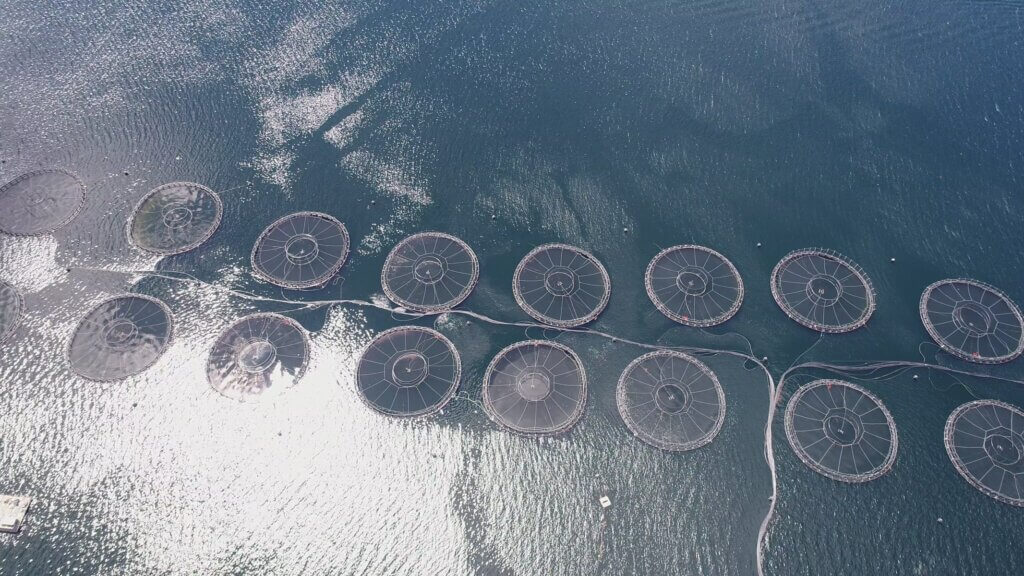
Forty different species are victims of aquaculture in Australia, with the most intensively farmed animals being tuna, prawns, crabs, barramundi, and salmon. Salmon are the most commonly farmed species, with 47 farms owned by eight companies keeping some 12 million fish captive in what can only be described as underwater factory farms.
Recently, Tasmanian salmon farming has made headlines, owing to a government pause on the industry’s expansion while it investigates its environmental impact.
This investigation follows dozens of issues raised around the ethics and sustainability of fish farming.
The more information that comes to light about this clandestine industry, the clearer it is: not only should fish farming never be allowed to expand, but it should be shut down entirely.
Fish Farms are Just as Cruel as Battery Hen Sheds
In their natural homes, fish have the entire sea in which to swim, and Atlantic salmon, the kind farmed in Tassie, travel thousands of miles , but when confined to fish factory farms, they can do nothing more than swim aimlessly in circles for their short, miserable lives.
Up to a quarter of fish in fish farms show signs of severe depression and “give up” living .
Fish aren’t fillets, but sensitive, clever individuals with their own wants and needs. Some fish use tools, some show affection by rubbing gently against others, and some even make art for love. All suffer when confined on farms. Scientists agree that the pain-response systems of fish are identical to those of mammals , with one Australian expert referring to the agony fish feel when hauled from the water as “the Bends on steroids ”.
If you wouldn’t do it to a dog, why do it to a fish?
Fish Farms Spread Disease
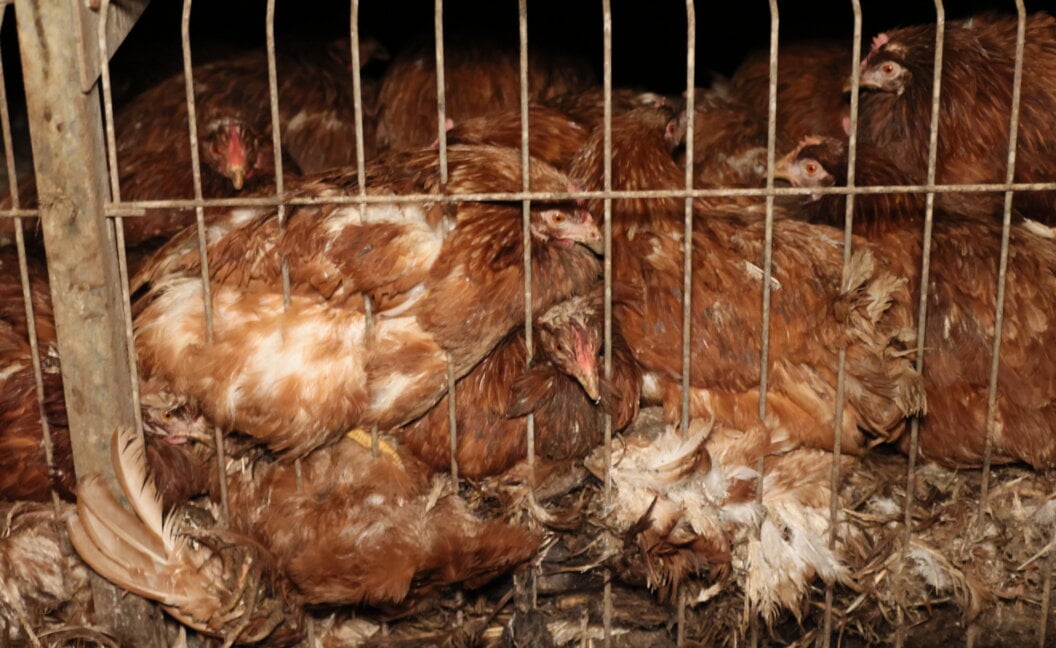
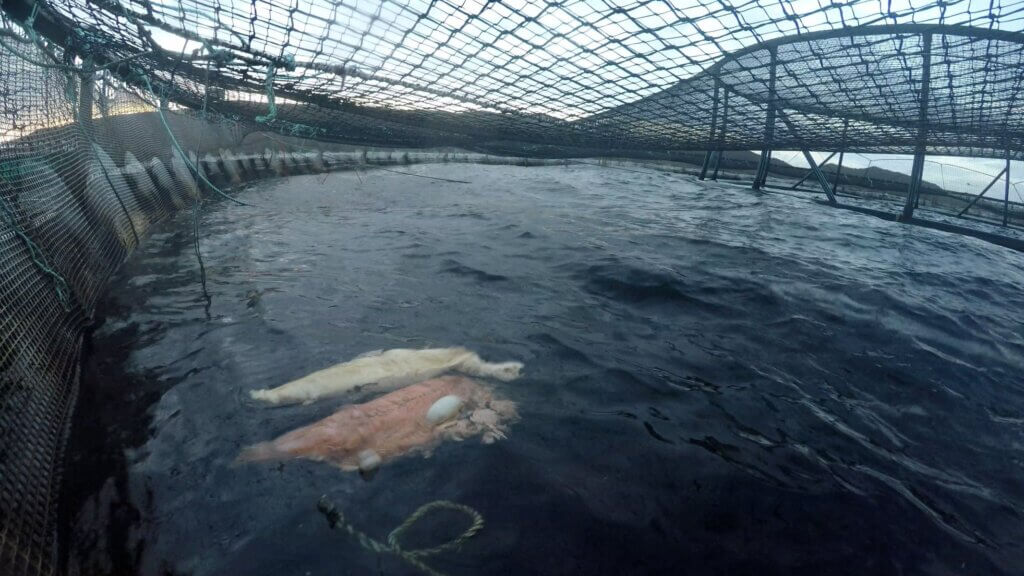
Fish farms are incredibly crowded, and diseases and parasitic sea lice thrive in the filthy, intensive conditions. Australian summers make warm waters the perfect breeding ground for amoebic gill disease. This parasite eats away at fish gills, making it difficult for them to breathe and eventually killing them.
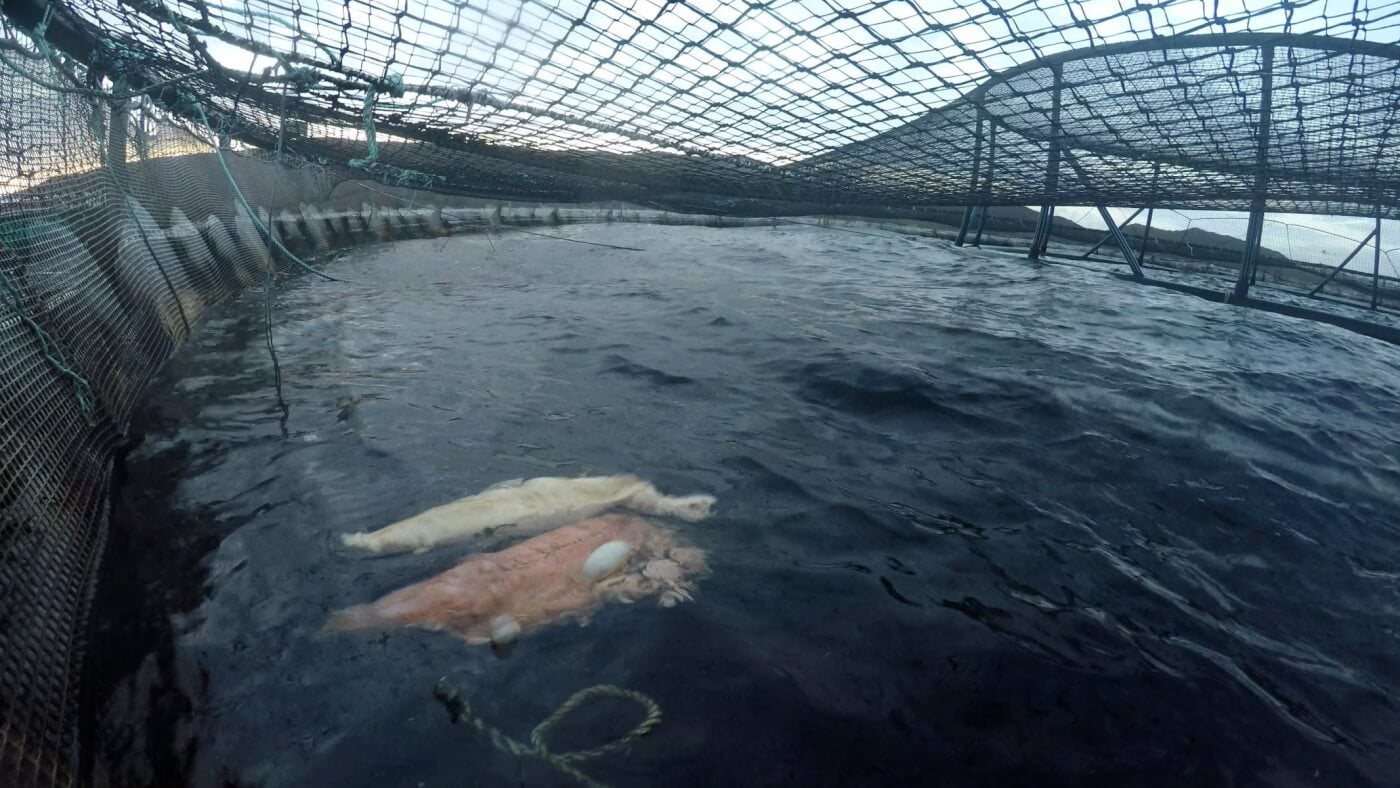
Australia has also seen mass deaths from pilchard orthomyxovirus (POMV) on Tasmanian fish farms in Tasmania, leading to the dumping of more than one million fish, and the approval of another antibiotic for use in aquaculture.
With antibiotic resistance posing a real threat to the effective treatment of human ailments, we really shouldn’t be supporting an industry in which a major player (Tassal) tried to block a report revealing that just one marine farm lease used 600 kilograms of antibiotics in a single month , and a shocking 1.3 tonnes of antibiotics at its Okehampton Bay leases.
The implications of this are huge and potentially deadly. ‘Elevated antibiotic levels’ have already been found in wild fish caught near Tasmanian fish farms.
Fish Farming is Bad for the Environment
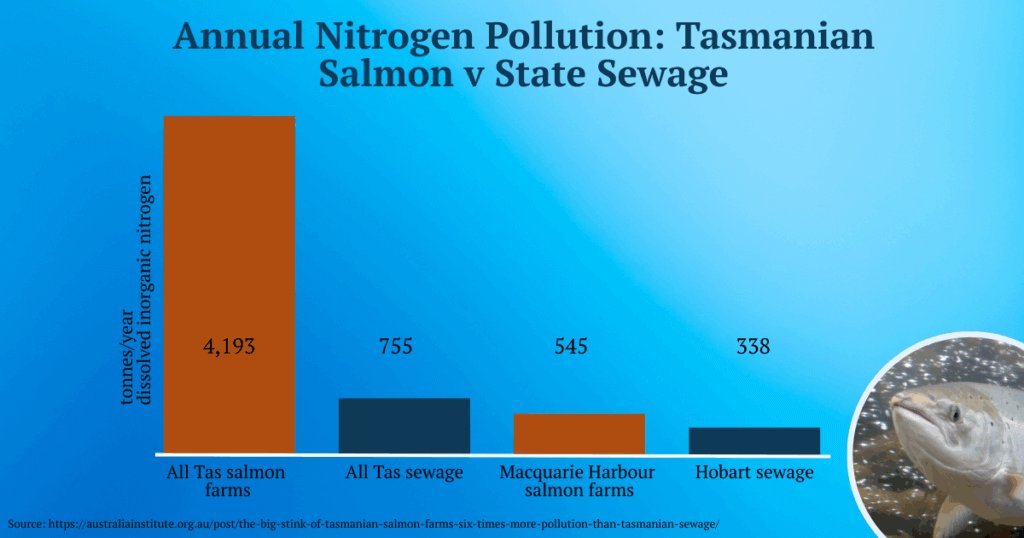
Tasmanian salmon farms produce 6 times more pollution each year than Tasmania’s entire sewage, and many of the chemicals released into the environment from these facilities are known to be toxic to other fish, birds, and mammals.
Dead salmon are also sometimes dumped in landfill sites, exposing their rotting bodies to wildlife and potentially posing a biosecurity risk.
Fish may also escape factory farms (wouldn’t you?), infecting other fish and marine animals.
Fish Isn’t a Health Food
No one’s flesh is good for us, and eating fish can be hazardous to human health. No one wants a mouthful of sea lice or bloody sores, but what about arsenic, mercury, dioxins, lead, or PCBs?
As waterways and oceans become more and more polluted with chemicals and microplastics, so do fish. Oh, and that “healthy” pink you look for in a salmon fillet? It’s likely the synthetic compound astaxanthin, added to fish feed to dye it pink .
You Can Help Tasmanian Salmon and Other Fish
Imagine spending your life in a filthy space surrounded by corpses, being denied everything natural and important to you, then suffering the agony of slaughter. The only way to spare fish this misery is to go vegan.
Take our 30-day vegan challenge and enjoy a month full of tips and support to help you swim away from cruelty and dive into a more compassionate life.

Help Animals in 2026: Renew Your PETA Membership!
Donate Now