Wild-Animal Skins
You’ve likely seen overpriced, disingenuously named “luxury” accessories made from the skins of crocodiles, lizards, alligators, snakes, ostriches, and other wild animals, but do you know how cruel they really are?
The animals used in these items are either poached from their wild homes or raised on filthy factory farms before they’re killed in extremely gruesome, painful ways and mutilated without any prior stunning or painkillers.
Cold-Blooded Cruelty
Crocodiles
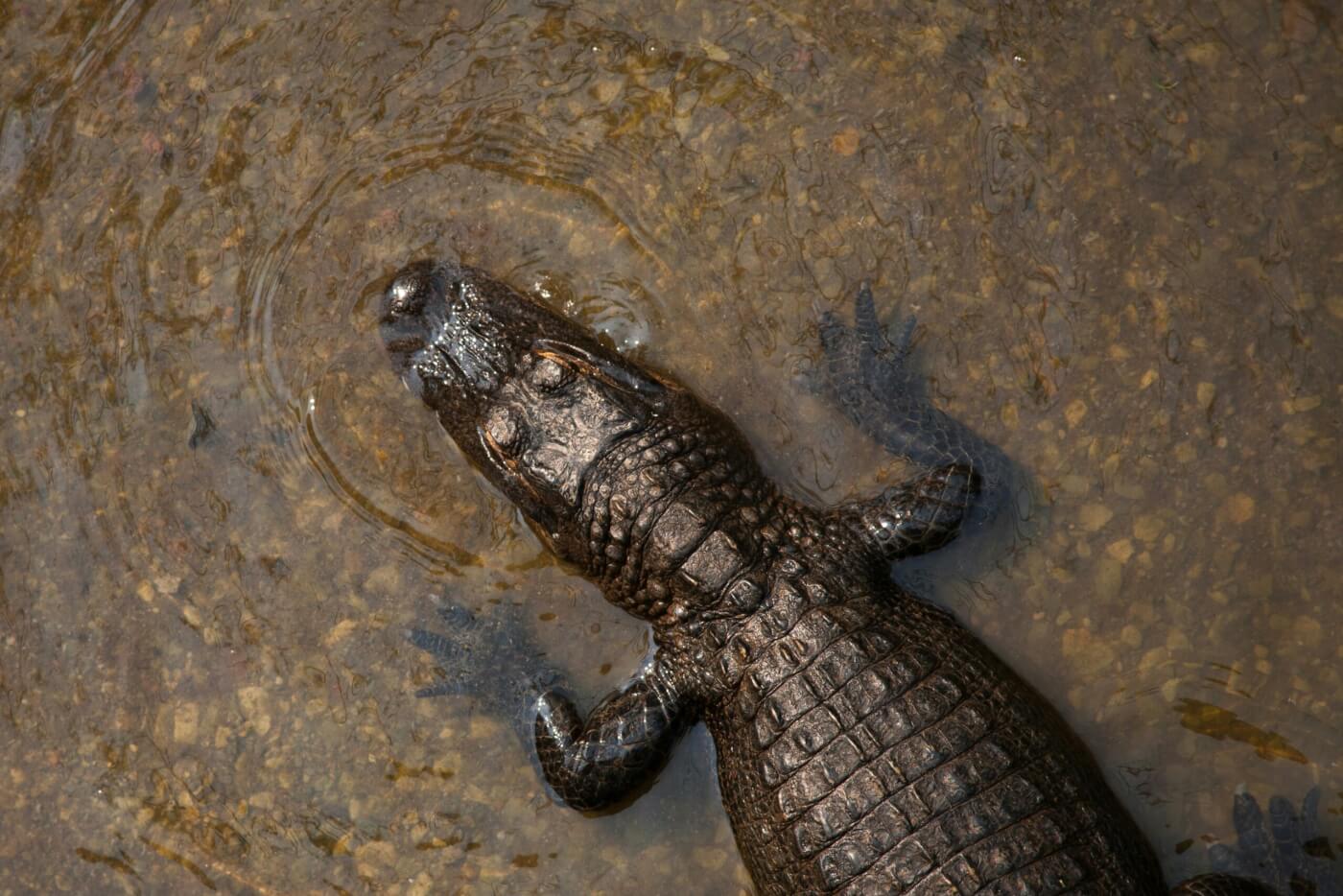
Crocodiles are fascinating, prehistoric, intelligent individuals. They’re also Indigenous and deserve our protection, yet Australia is a major player in the wild skins trade, supplying 60% of the world’s crocodile skins used in fashion .
In the Northern Territory and Far North Queensland, over 150,000 sensitive crocodiles are farmed yearly , and many come from eggs taken from wild nests. Crocodile mothers are naturally nurturing, often carrying their babies around in their mouths and on their backs, but in the Northern Territory, the skins trade denies them that chance. It’s legal in the Northern Territory to take 70,000 eggs and 140 live crocodiles from the wild every single year ! Because it takes the skins of at least two crocodiles to make a single bag , wild-animal skins are accessories to mass murder.
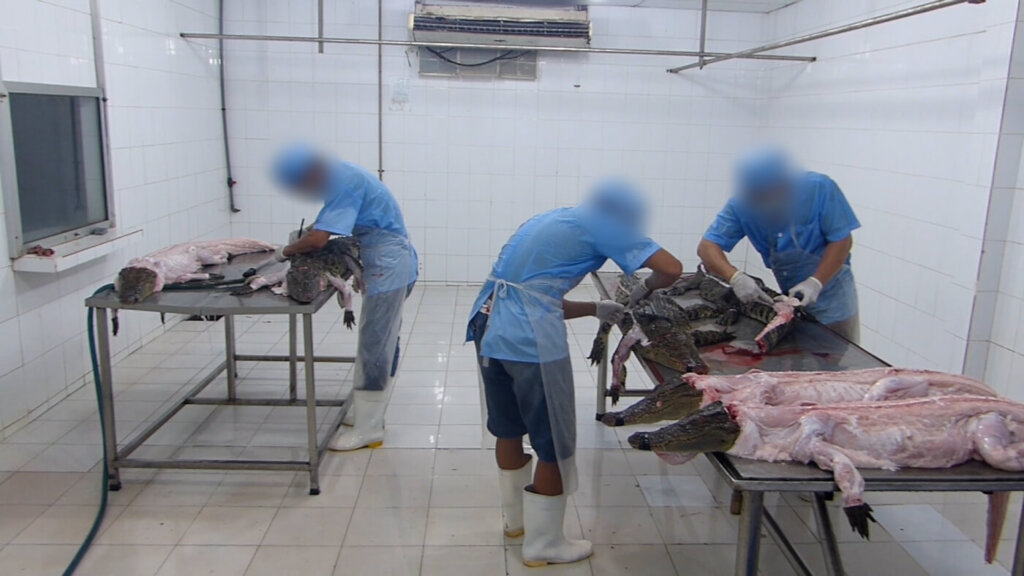
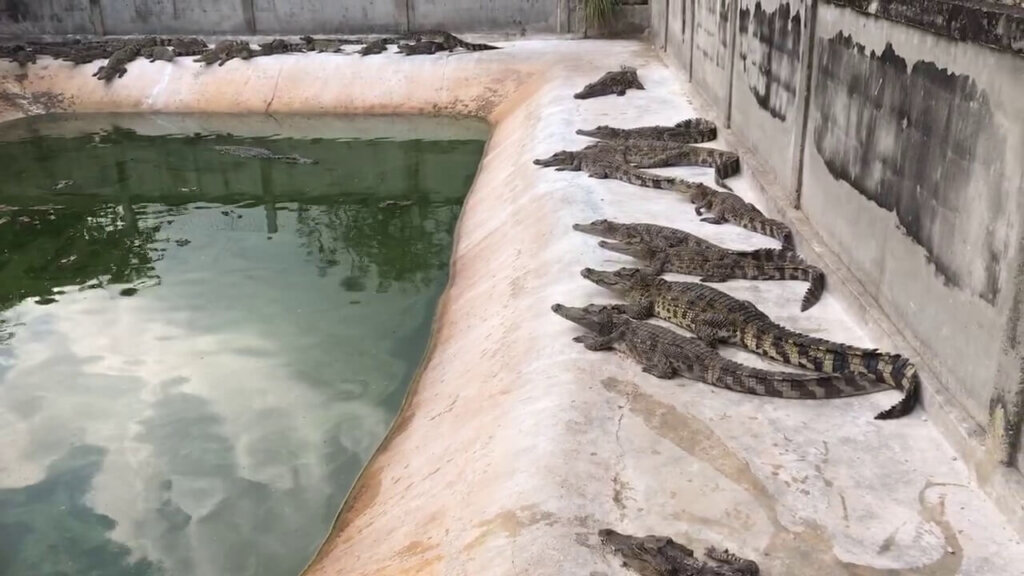
Crocodiles farmed for their skins are raised on giant intensive farms in filthy tanks barely longer than their bodies. In 2021, investigation footage released by Farm Transparency Project revealed the miserable lives of Australian crocodiles on Northern Territory farms supplying Hermès. There, animals languish in caged tanks before being electrocuted, dragged, and mutilated – some while still conscious. In the video, one animal tries to get up after a worker has cut the back of his neck open with a blade and inserted a screwdriver into his skull in an attempt to scramble his brain.
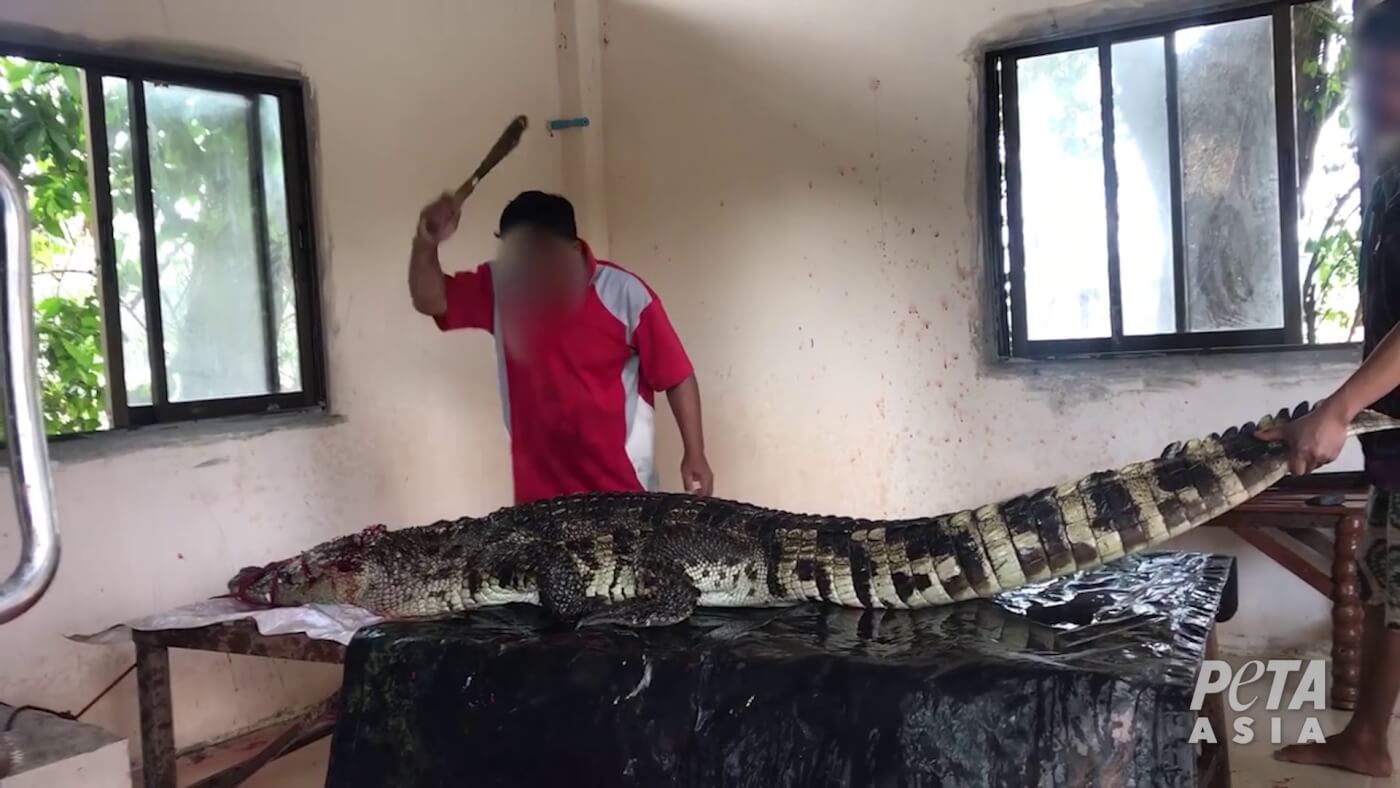
The story is the same all over the world. In abattoirs in Thailand and Vietnam, crocodiles are shot with captive-bolt guns or electroshocked before workers thrust a metal rod into their heads in an attempt to scramble their brains or down their spine to sever the spinal cord, causing a painful and protracted death that can take over an hour. Sometimes, animals are skinned alive.
Snakes
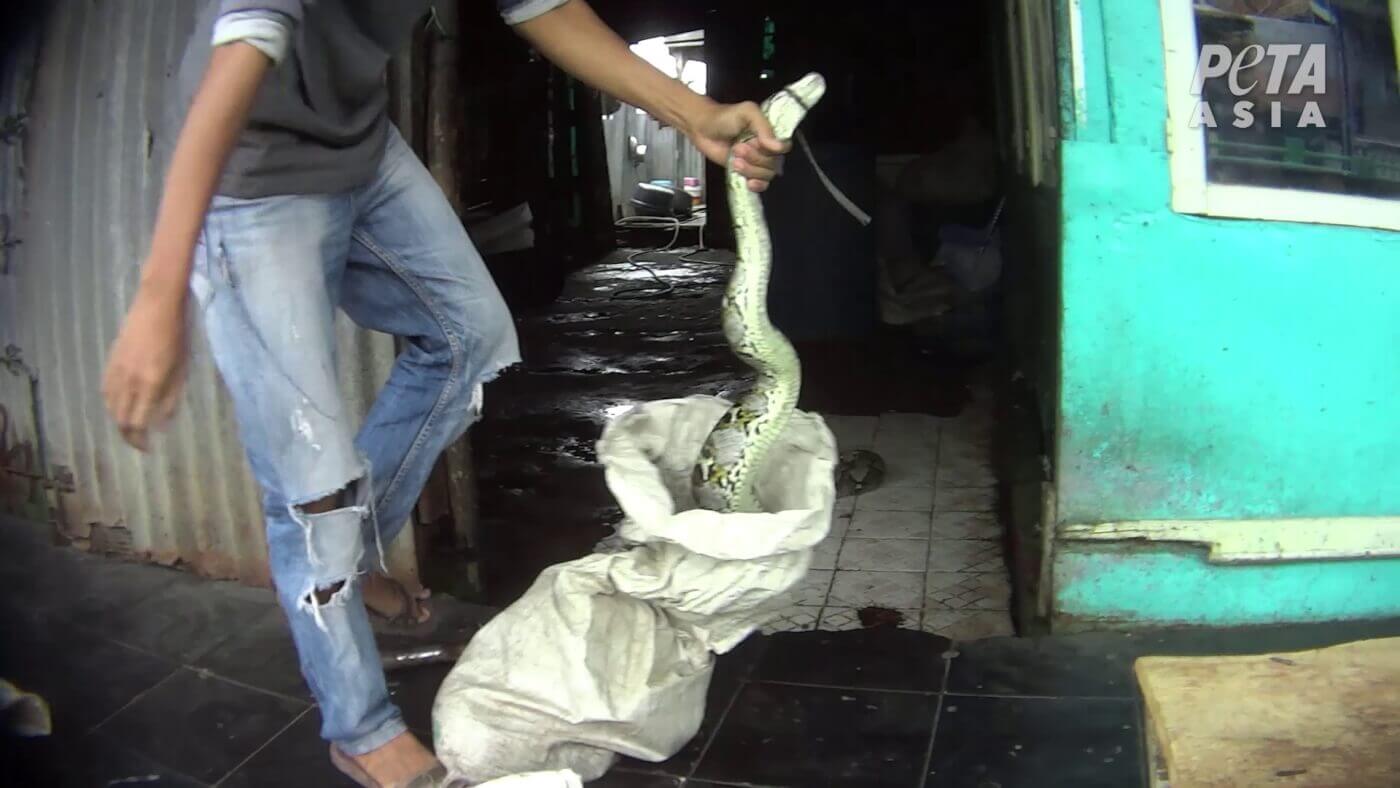
Snakes are commonly nailed to trees, and their bodies are cut open from one end to the other as they’re skinned alive. Their skinless, mutilated bodies are then discarded, but because of their slow metabolism, it can take hours or even days for the snakes to die as they writhe in pain. In some countries, pythons are suffocated to over an agonising half hour by workers who seal the snakes’ mouths with a rubber band and then pump them full of air or water.
A PETA Asia investigation into the wild animal–skins trade in Thailand revealed thousands of snakes being bashed on the head with hammers and impaled with hooks while still moving. The two python farms investigated supply skins to Caravel, a tannery owned by Kering – the parent company of Gucci, Saint Laurent, and other brands.
Lizards
Lizards are often decapitated, and sometimes their skin is torn off as they writhe in agony. PETA Asia investigators revealed that workers at an Indonesian abattoir that supplies Gucci with lizard skin tied the animals’ legs together and beheaded them without stunning – causing them a prolonged, agonising death.
Ostriches
Ostriches are not only raised on farms for their flesh and feathers; their delicate skins are also used for designer leather products. Ostrich skin goods feature an easily recognisable “pocked skin” effect— marks that indicate where the feathers of a living, feeling bird once grew. A PETA US investigation into the exclusive supplier of ostrich skins for Hermès Birkin bags revealed how these birds trip and fall as they’re shoved into stun boxes before having their throats slit while their helpless and terrified flockmates watch.
Buying Wild-Skins Illegal Supports Wildlife Trafficking
Because wild animals are taken from their homes to fuel the skins industry, it, in turn, fuels the illegal wildlife trade, where a lack of transparency and weak enforcement of meagre laws lead to fraud and animal abuse. It’s estimated that for every animal legally killed for the wild animal–skins trade, another is poached.
The Pandemic Potential of Wild-Animal Skins
As we’ve seen from avian and swine flu outbreaks on factory farms, any instances in which animals are confined in their own waste and crowded in with other animals will inevitably become breeding grounds for disease.
Conservationists warn that there are several disease-risk factors involved with wild-animal skins. Aside from the sub-par hygiene on factory farms, the skin trade fuels the street meat trade in Asia and Africa, making it a player in the same kind of problematic markets that gave rise to the deadly COVID-19 pandemic . In addition, removing wild animals from their natural homes and handling them increases the risk of zoonotic transmission.
How You Can Help Wild Animals
- Never buy goods made from wild-animal skins— Demand drives supply and is why animals continue to be exploited and killed. By leaving wild-animal skins on the shelf and supporting businesses selling vegan leathers, you help save lives.
- Spread the word— Cruelty survives in the darkness. Share what you’ve learned about the cruel wild animal–skins trade with family and friends to help them make informed, kind choices.
- Tell cruel companies to stop killing— While many compassionate brands, several fashion shows, and major retailer David Jones have now dropped wild-animal skins, others still use skin stolen from snakes, crocodiles, alligators, or other animals in their collections. Please tell these brands to choose compassion and stop selling merchandise made from tormented animals:
Help Animals in 2026: Renew Your PETA Membership!
Donate Now