Are You an April Fool That Buys “Humane” Lies?
Fake product launches, dribble cups, chocolate-covered brussels sprouts – April Fool’s Day is famed for pranks and practical jokes.
But there are some lies used to fool the Australian public all year long: disingenuous “humane” and “high-welfare” labels slapped on the flesh, eggs, fleece, and feathers of abused and dead animals.
Here’s how to spot items designed to make a fool out of you, and why you should never buy “humane” lies.
“Cage Free” Eggs
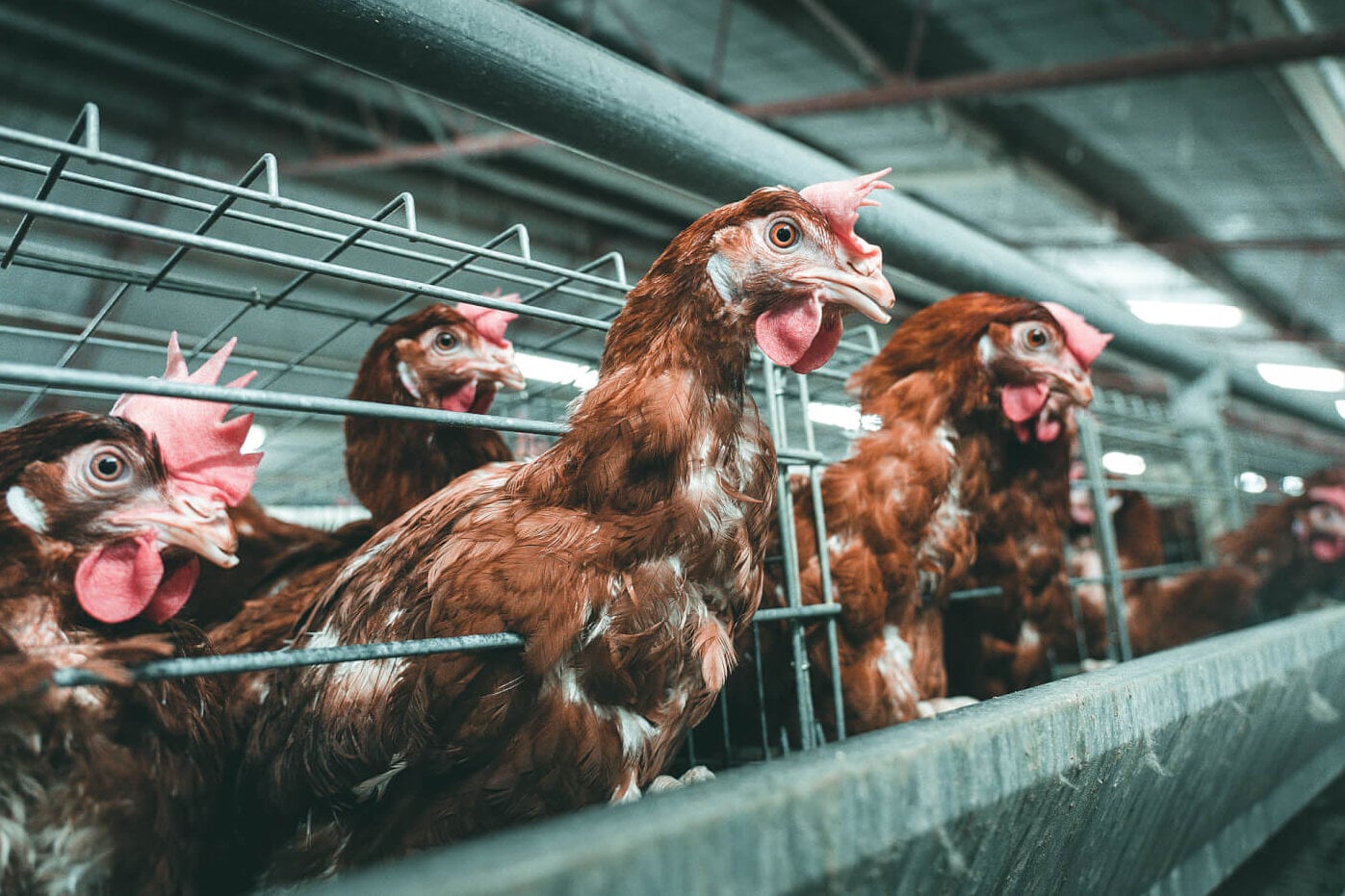
Chickens are clever, curious individuals who express their distinct personalities via complex social behaviours. Mother hens cluck lovingly to their unhatched chicks, and chickens dream in colour and can even count, just like a human toddler. Yet, in all egg-producing systems, chickens are exploited like egg machines and denied their natural behaviours.
Eggs labelled “cage-free” are still permitted from farms that house up to 10,000 hens per hectare of space, and the RSPCA Australia standard still allows for male baby maceration and for birds’ beaks to be cut off.
Regardless of any “welfare” label slapped onto eggs, hens are manipulated to lay more eggs than is natural, and chickens have their throats slit at just 18 months old.
“Humane” or “High Welfare Meat”
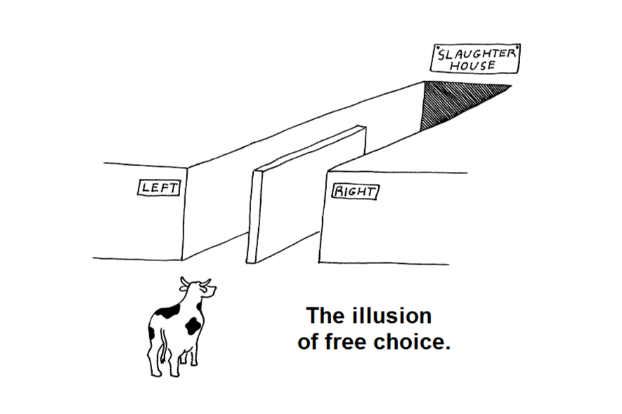
If you’ve seen the original, oft-memed Abstruse Goose cartoon (below) that depicts a cow standing before two doors that lead to the same slaughterhouse, you’ll understand one reason “humane” or otherwise “certified” meat makes no sense.
Regardless of the living conditions or labels, all animals used for their flesh go to the same blood-soaked abattoir to have their throats slit before they arrive on our plates.
Australia boasts about animal welfare, but more than two-thirds of the animals we eat are raised in indoor systems without enrichment, room to move, or even sunshine or fresh air.
While people tend to picture caged chickens or pigs stuck in sow stalls when they imagine the cruelty behind meat, up 80% of Australian cattle also spend much of their lives on barren, miserable feedlots without shelter or grass.
Ask yourself: Would I think this was humane if they were a dog?
“Responsible” Down
Again this winter, stores will be brimming with feather-filled jackets claiming to be “responsible down”, but the reality is, there’s no such thing.
Nine PETA exposés of the down industry have revealed egregious abuse at farms and abattoirs around the world, including footage of workers tearing live birds’ feathers out, even on farms claiming to be “certified” and “responsible”.
“We advertised that it’s all plucked after slaughter – nobody dares to buy it if you say it’s live-plucked”
~ A down buyer telling PETA investigators about using labelling lies
Birds farmed for their feathers live in dirty, cramped conditions and always end up dead at a young age. One investigation even found ducks used for their down having their legs hacked off while they were still alive.
The only real way to ensure no animals were harmed for your warmth is to buy vegan down made from plants or recycled ocean waste.
“Ethical Wool”
To date, PETA entities have released 15 exposés of sheep abuse in the wool industry, including seven from Australia.
In the Australian wool and lamb flesh industries, up to 15 million newborn lambs die each year from exposure or starvation within their first 48 hours of life.
Those who survive are mutilated, usually without pain relief, then spend their whole lives being roughly shorn and thrown about shearing sheds, before either being prodded onto nightmarish live export vessels, or killed for their flesh locally.
One investigation into New Zealand wool, sold as “the world’s leading ethical wool,” revealed workers kicking, beating, and stomping on sheep, and throwing them. One farmer was also documented slitting the throat of a conscious sheep.
It just goes to show that labels aren’t worth the paper they’re printed on.
“Best Practice” Salmon
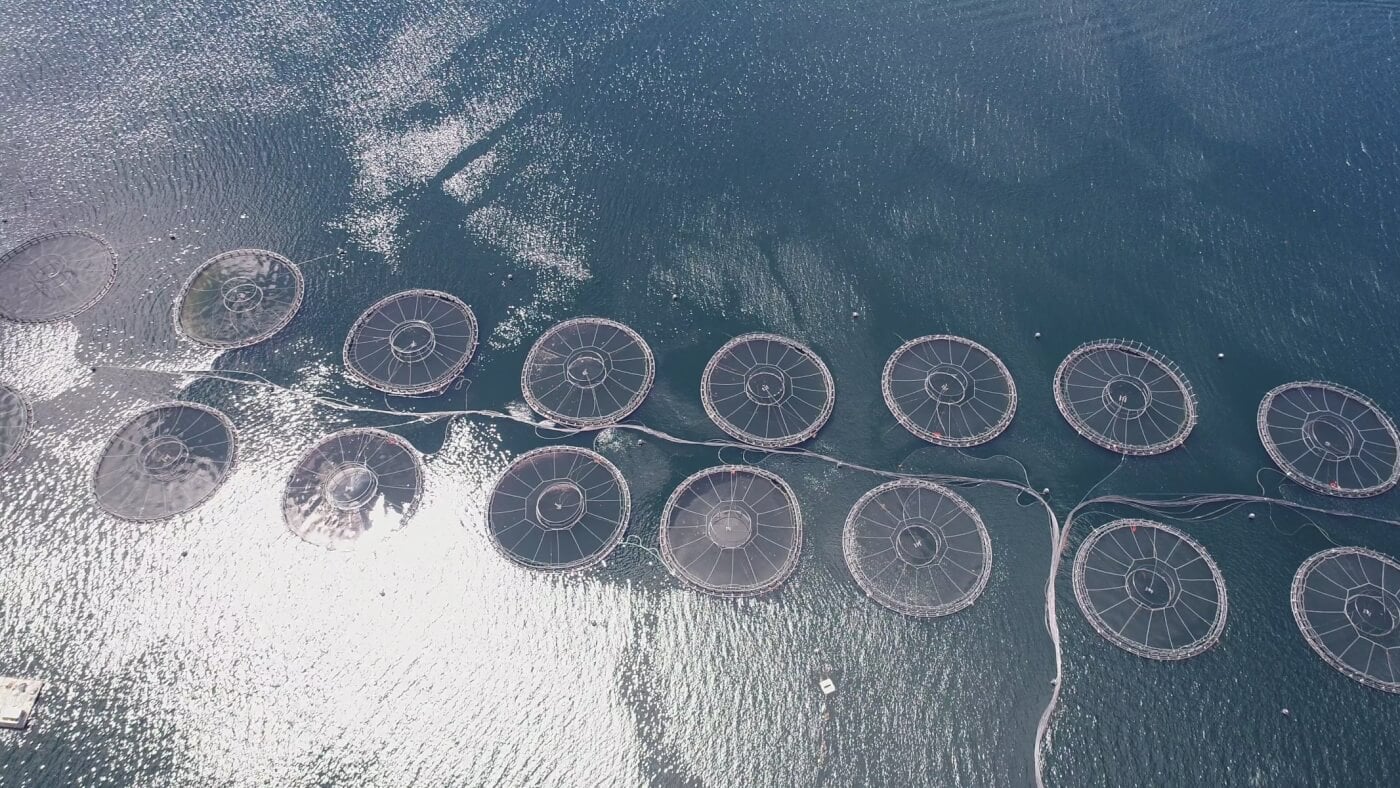
Salmon are sensitive, clever, and nomadic animals who need to swim vast distances to be happy, so no salmon farm sea pen can ever be suitable for them, no matter what the label says.
In Australia, 47 salmon farms owned by eight companies keep 12 million fish captive in underwater cages. In nature, Atlantic salmon travel thousands of miles, but in these sea pens, they can only swim aimlessly in circles for their entire lives. Life there is so boring and frustrating that up to a quarter of fish in fish farms show signs of severe depression and “give up” living.
Those who survive are pumped with antibiotics or risk being eaten alive by lice. Tasmanian salmon also produce 6 times more pollution each year than Tasmania’s entire sewage. Gross.
Don’t Be a Fool, Go Vegan
You don’t have to buy the products of cruelty to animals just because a label tells you it’s ok. “Humane”, “high welfare”, and “ethical” labels are designed to comfort consumers, not animals.
Critical thinking is the cornerstone of social justice, so don’t be a fool – learn to question when a company tells you something, and remember: the only way products can ever truly be “cruelty-free” is when they’re animal-free!
To cruelty-proof your fridge and wardrobe for life, start your vegan journey today!