Feasting on Festive Fish? May As Well Be A Feline!
If you wander down Wattle Street by the Sydney Fish Market in the lead-up to Christmas (and the market’s annual sale), prepare to be confronted by the image of a dead cat.
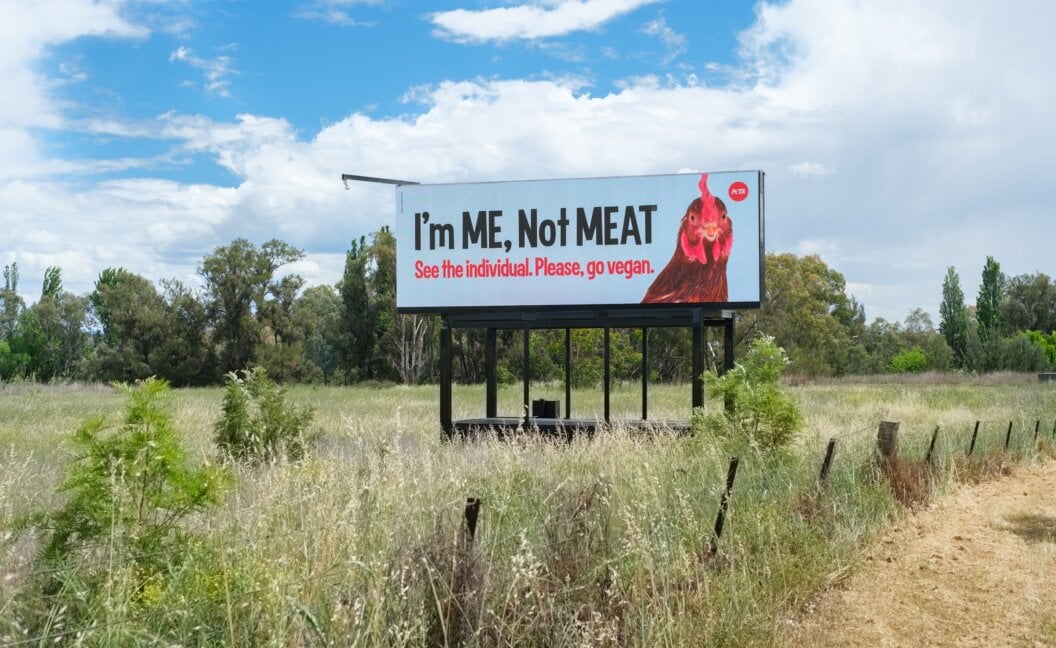
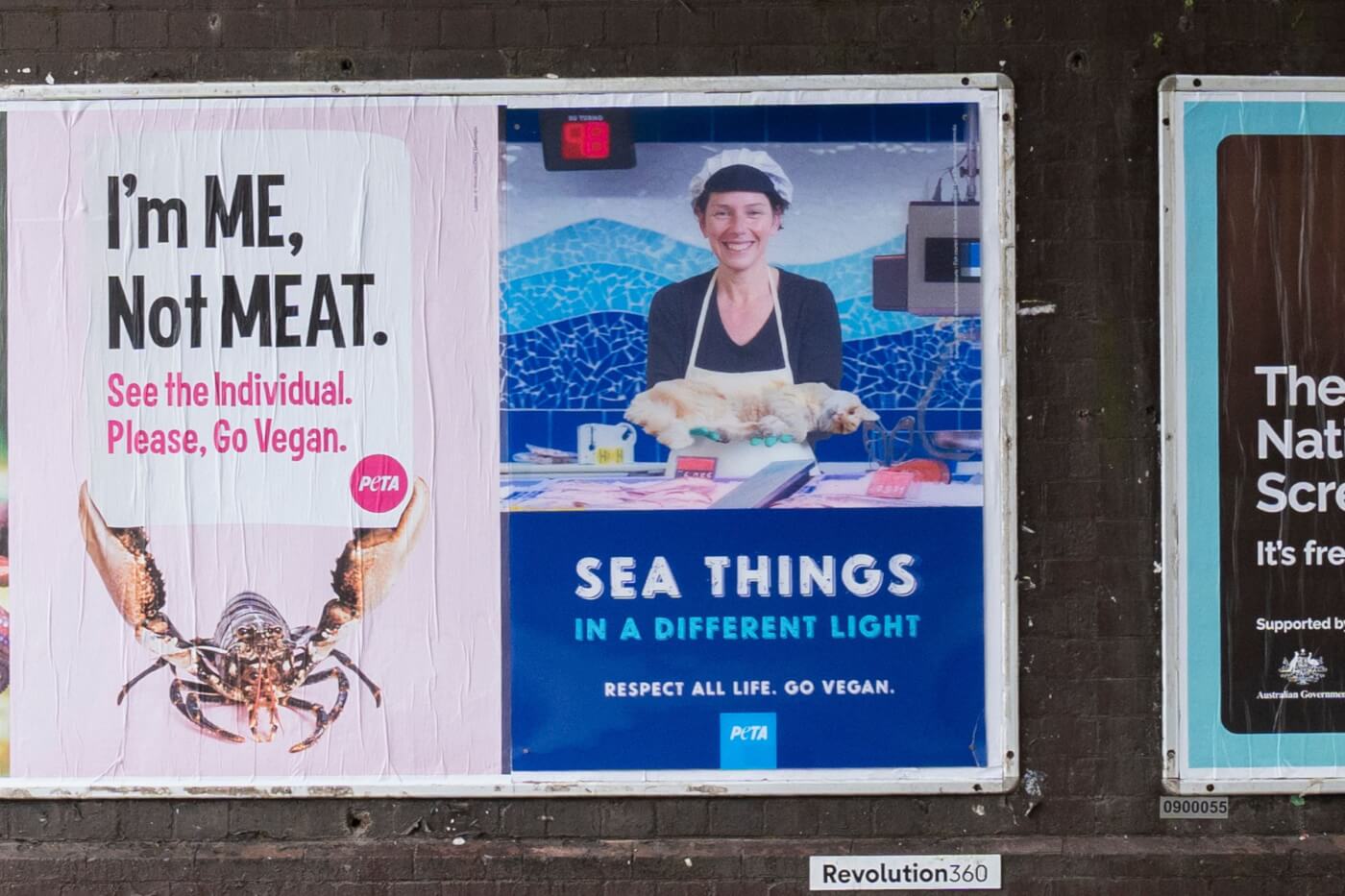
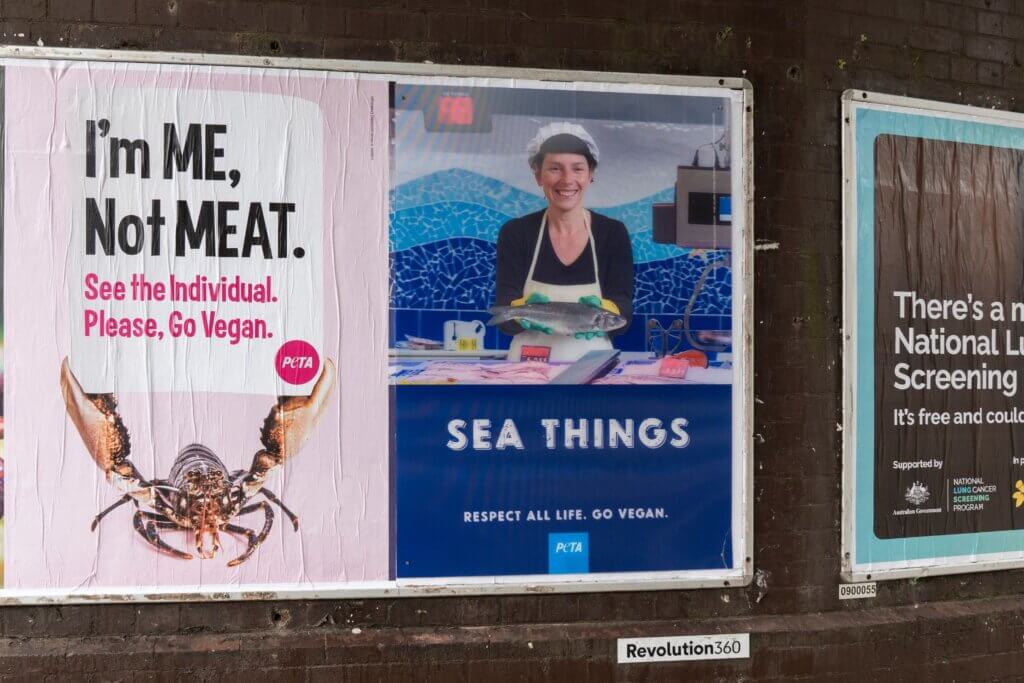
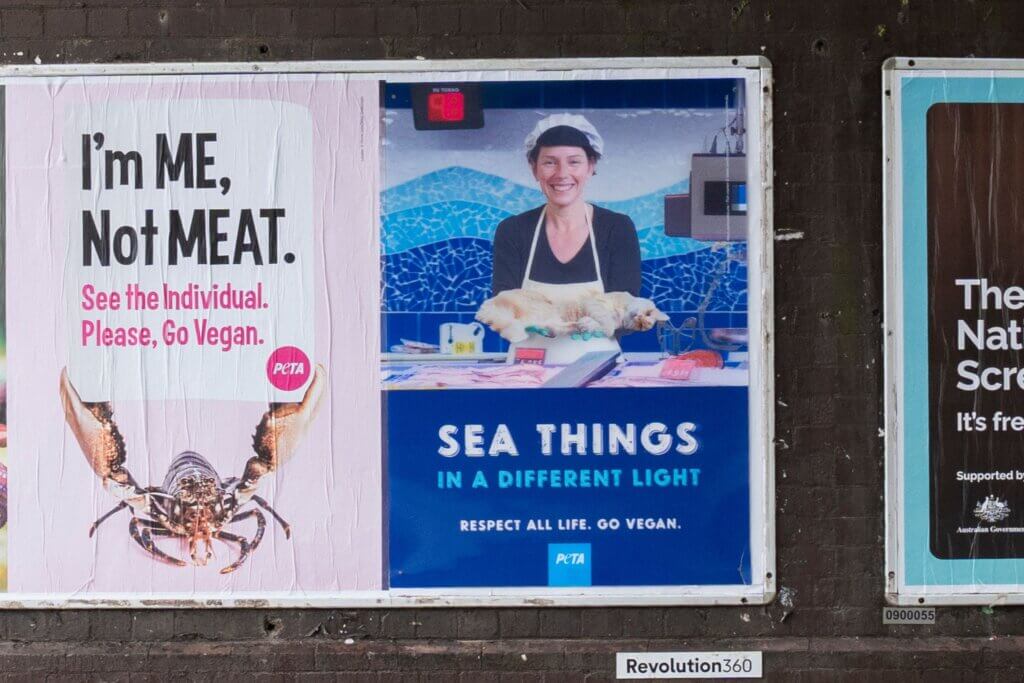
PETA has placed a clever lenticular billboard in the area, featuring a smiling fishmonger holding a limp fish from one angle and a dead cat from another, reminding shoppers to “Sea” things differently, and view fish and other sea animals as the intelligent, sensitive individuals they are.
Fish have Feelings
Long gone are the days when anyone believed the ludicrous notion that fish lack feelings. We’ve known for a long time now that they, like mammals (including us), have complex nervous systems, allowing them to feel every moment of the agony that comes from being hauled from their homes, bludgeoned, and beheaded.
Fish also have rich emotional and social lives. They share knowledge, have long memories, and share cultural traditions. Some woo potential partners by creating intricate works of art in the sand on the ocean floor, others use tools, and all are individuals who deserve to live.
Saying “I only eat fish” is no different to saying “I only eat cats”. Thinking that a trout is more of a meal than a tabby is an example of speciesism, the flawed belief that some animals matter more than others. But, in all the ways that matter, clever, curious fish are no different to the cats with whom many of us share our homes.
Fishing is Cruel
More fish are killed for food each year than all other animals combined, making them some of the most maligned animals on the planet. Australians eat an eye-watering amount of sea animals, including an estimated 350 tonnes of sea life sold during the Sydney Fish Market’s 36-hour Christmas sale alone.
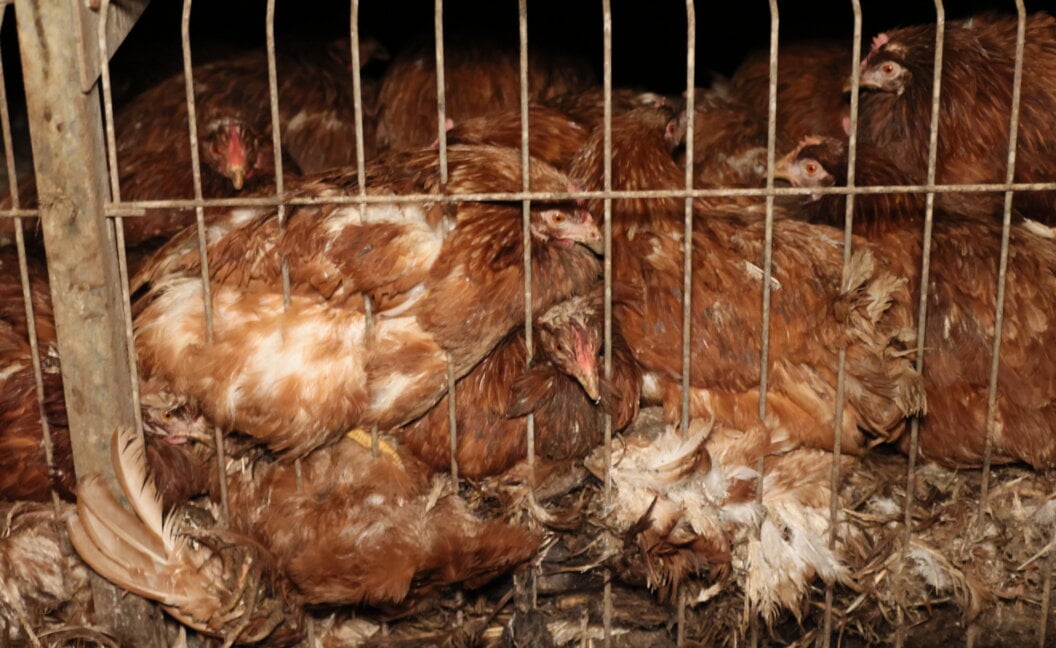
Aside from hauling them away from their ocean homes by the trillions, humans now farm fish on factory farms not unlike those raising pigs, chickens and others. On salmon farms, salmon, who naturally nomadic, are forced to swim in tiny, miserable circles, with up to a quarter of fish in fish farms simply “giving up” living due to depression.
Farmed fish also end up infested with lice and are frequently treated with antibiotics, which contributes to Australia’s growing issue with antibiotic resistance.
Additionally, at-sea fishers unintentionally catch 38 million tonnes of other aquatic animals – including whales, turtles, sea birds and more – each year as the industry seeks to meet consumer demand for fish. The industry calls this “bycatch”, a flippant term to describe the mass murder of wildlife.
Fishing Ruins the Oceans
If you’ve seen the latest documentary from filmmaker Sir David Attenborough, Oceans, you’ll know that he calls the common fishing practice bottom trawling “unspeakably awful.”
Bottom trawling (also called demersal trawling) is a commercial fishing method in which giant, conical nets sweep the ocean floor, indiscriminately scooping up sea animals and wreaking irreparable damage to the delicate seabed.
Dragging football-field-sized nets kills animals, destroys delicate coral and marine plants, and fractures the ocean floor, releasing carbon into the atmosphere.
Scientists have calculated that trawling releases approximately 370 million metric tonnes of carbon dioxide annually – the equivalent of the annual emissions from more than 66 million cars!
This means that when you eat fish, like when you eat methane-heavy beef, pork and other products that are really just rotting animal flesh, you’re contributing to the climate catastrophe.
Vegan Fish Exists – And It’s Delicious!
Given you can still enjoy the taste and texture of fish without harming anyone, why wouldn’t you?
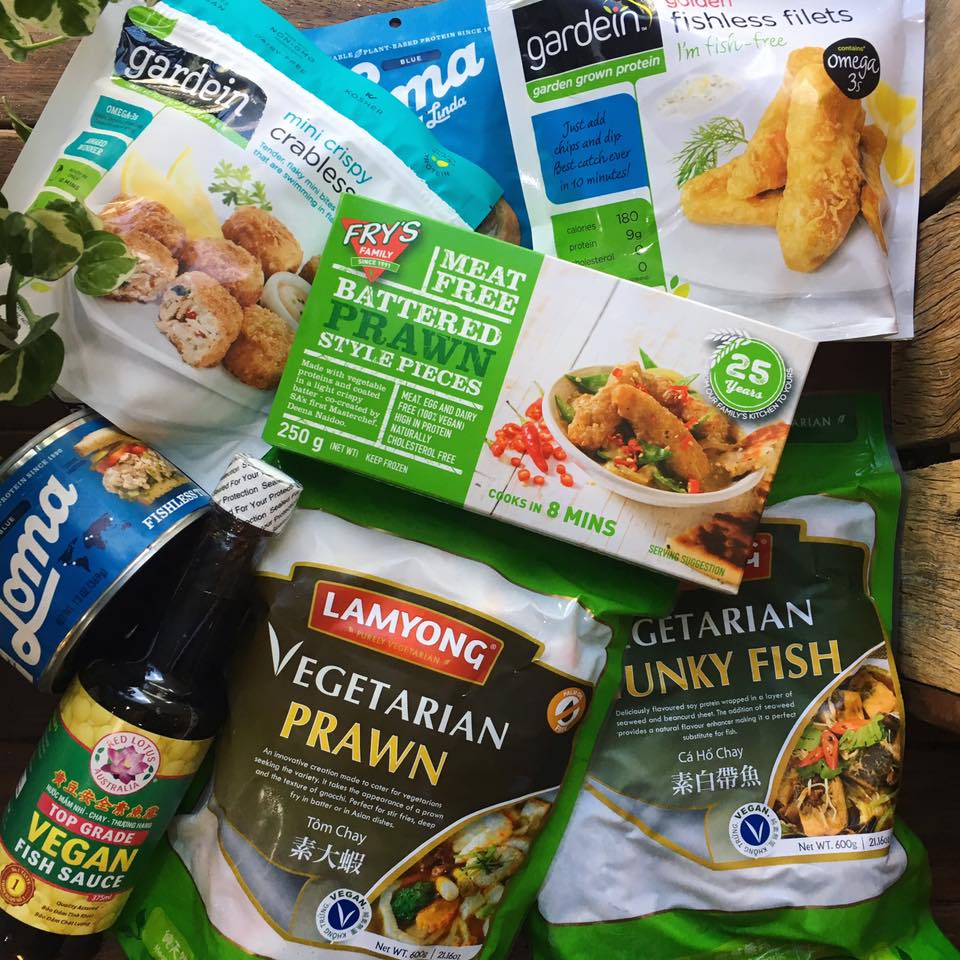
In Australia, you can buy everything from vegan crab and fish fillets to calamari, prawns, and even caviar!
Most vegan fish upgrades are even rich in omega-3, because fish get theirs from plant foods.
Skip the torture and go straight to the (plant) source!
Go Vegan This Christmas and Beyond
Changing the way we “sea” fish and other sea animals is vital to stop ocean collapse, but taking all animals off the menu is the only way to live a healthy life free from harm, while also helping the environment.
To turn over a new leaf and get started on your vegan journey, take our 30-day pledge today!
Help Animals in 2026: Renew Your PETA Membership!
Donate Now