To Ease Fuel Shortages, Stop Eating Animals
As the US-Iran conflict drags on and the Hormuz Strait remains in limbo, Australia is feeling the sting of fuel shortages.
Earlier this month, Prime Minister Anthony Albanese addressed Australians, urging them to limit non-essential car travel. In response, PETA wrote to the PM, asking him to lead by example by eliminating the unnecessary transport involved in his diet by going vegan.
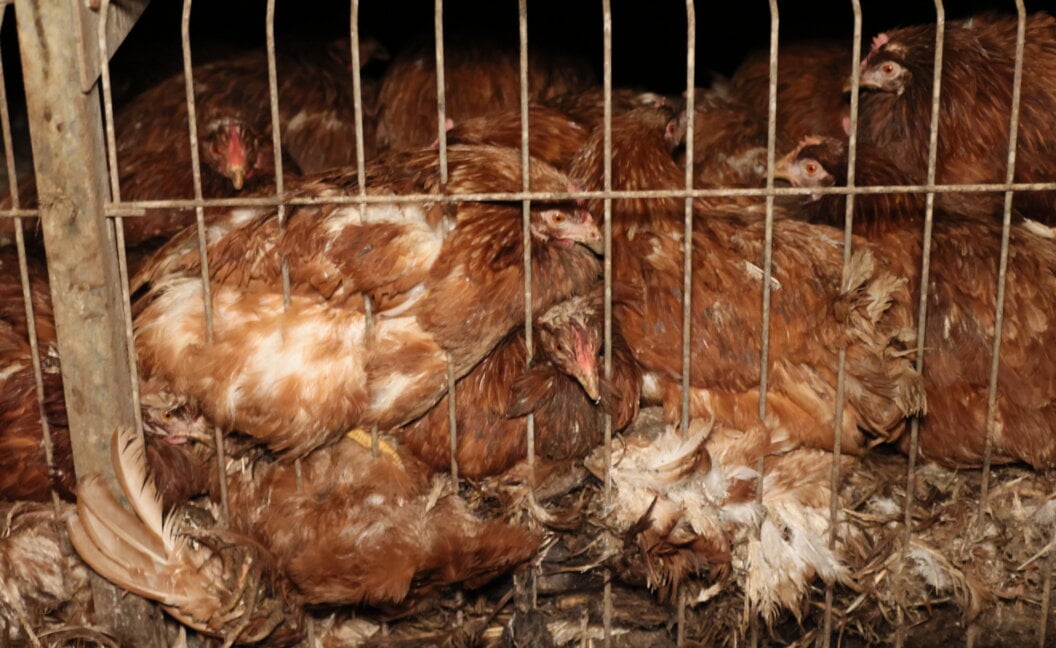
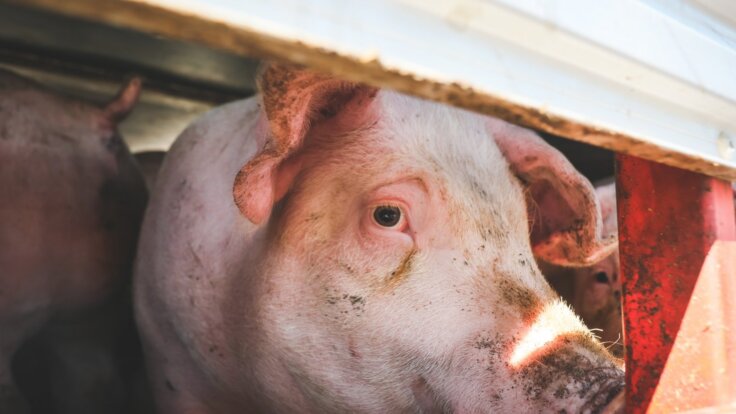
In the letter, PETA pointed out that no one needs meat to thrive, yet animals are trucked for long distances aboard road trains to slaughterhouses for humans to eat their flesh. These journeys are not only hellish for animals but also guzzle huge amounts of fuel.
Limiting non-essential travel might be necessary, but animal flesh is not. So doesn’t it make sense to prioritise ending fuel-intensive slaughterhouse traffic?
Prioritising Plants: The Sensible Route
Unlike fruits, vegetables and grains, no one needs to consume animal flesh to thrive, or even survive, making the fleet of road trains tasked with carrying animals to their deaths a wholly unnecessary use of fuel.
The CSIRO reports that cattle from the Northern Territory travel an average of almost 1000 kilometres, and sometimes as far as 2500 kilometres, to reach slaughterhouses on the east coast.
These journeys are gruelling for the frightened animals on board, who travel without food or water, sometimes in extreme heat, arriving stressed, only to be hoisted by their hind legs to have their throats slit.
Australia’s animal agriculture is also heavily reliant on diesel for transport, machinery, and irrigation, with one study estimating that the fossil energy demand for beef production can reach 46.6 megajoules per kilogram of retail-ready meat. Dairy processing is also one of the most energy-intensive sectors within the food industry.
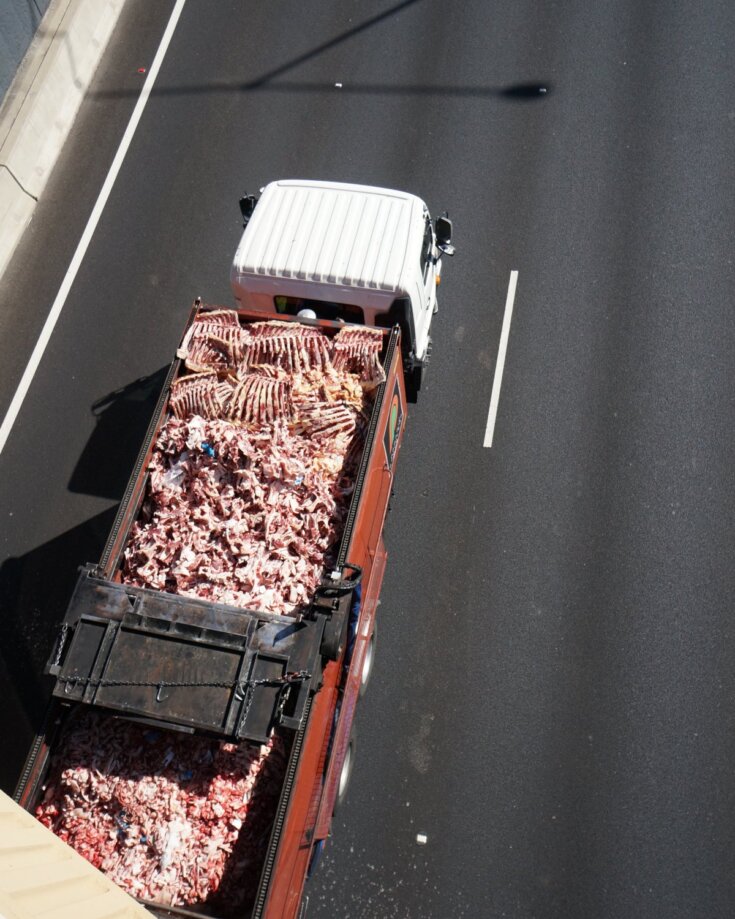
Fuel is also used for cleaning equipment and for trucking animal carcasses to rendering plants, where bones and sinew are boiled to make gelatin.
Save Fuel, Save Lives
Taking the enormous road trains that transport animals to their deaths isn’t just a way of reducing fuel waste; it’s also a way to save the lives of millions of gentle, clever individuals.
Every animal is someone with a unique personality. Like us, other animals have romantic partners, form friendships, love, grieve, think, play, and deserve to live their lives free from fear, pain, and exploitation.
Cows love ball games, chickens can count, sheep know when a friend is stressed – animals are not here for us, but with us. As the founder of farmed animal rescue Edgar’s Mission, Pam Ahern says, “If we could live healthy, happy lives without harming others, why wouldn’t we?”
Lower Your Environmental Impact
We all know that ending our reliance on fossil fuels is an important way to save the planet from climate catastrophe, but aside from how we fuel our commute, how we fuel ourselves makes a huge difference.
Research from Oxford University shows that adopting an animal-free diet is the ‘single biggest way’ to reduce an individual’s environmental impact on Earth.
Further studies have found that vegan diets lead to 75% fewer climate-heating emissions, less water pollution, and less land use than diets high in meat.
From the methane emitted by animals used for food to the fuel used for the trucks that drag animals to violent deaths, eating animals is a disaster for the planet.
Ready To Pump The Brakes On Cruelty?
Fuelling your body with plants rather than dead bodies is better for animals, your health, and your planet.
Start your journey today with our FREE 30-Day Vegan Challenge!
Help Animals in 2026: Renew Your PETA Membership!
Donate Now